8-Bit or Die: Why Producers Are Swearing by Game Boy Sound Chips as an Act of War
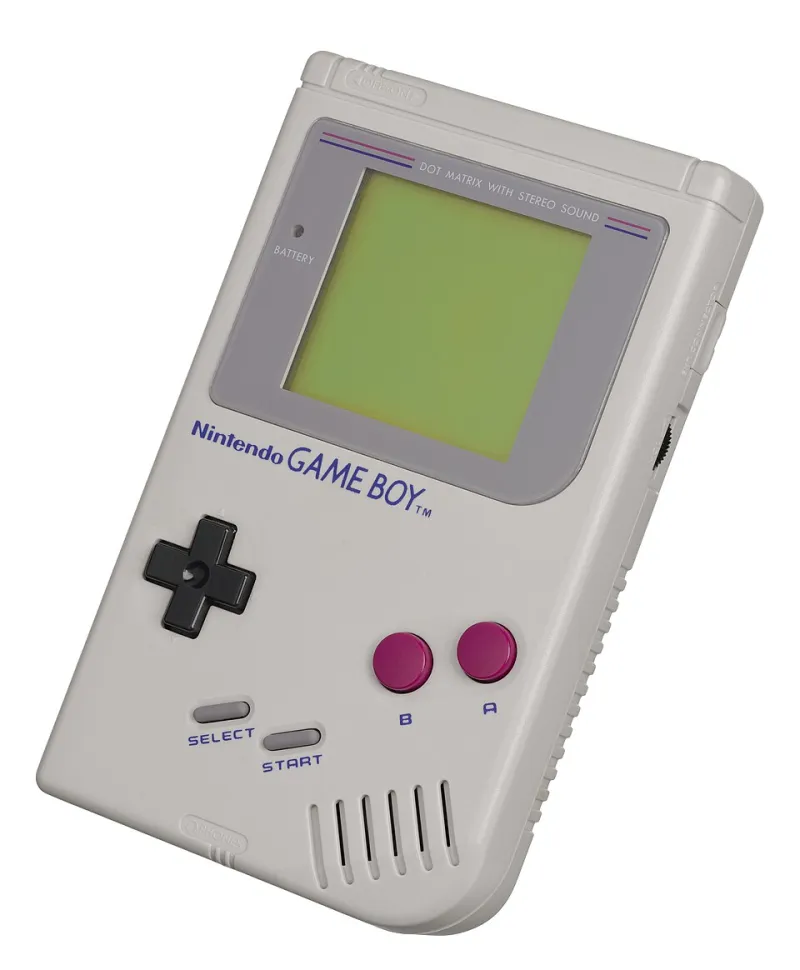
Photo: Evan-Amos, Public domain, via Wikimedia Commons
There's a Game Boy sitting on a producer's desk in Portland right now. It's not there for decoration. It's not some ironic prop staged for an Instagram flat lay. It's running LSDJ — a tracker software that turns Nintendo's 1989 handheld into a four-channel synthesizer — and it is, by every technical measure, one of the most deliberately limited music-making tools a person could choose in 2024. That's exactly the point.
Bitcrushing — the act of reducing audio to absurdly low bit depths and sample rates — used to be a footnote in a sound design manual. Now it's closer to a manifesto. And the people building their entire sonic identity around Game Boy hardware and retro chip architectures aren't just chasing nostalgia. They're picking a fight.
Where It Started: The Chip Was Always a Canvas
Chiptune as a form has roots that run deep into the 1980s, when Japanese composers like Koichi Sugiyama and Nobuo Uematsu were writing orchestral-scale emotion into hardware that could only produce a handful of simultaneous tones. The constraint wasn't a bug — it was the whole creative challenge. You had a triangle wave, a pulse wave, a noise channel, and maybe a DPCM sample slot if you were lucky. That was your orchestra.
What those composers figured out, and what a new generation is rediscovering, is that limitation breeds a specific kind of intensity. When you can't layer 47 tracks of lush reverb-soaked synth pads, every single note has to carry weight. Every frequency choice is load-bearing. There's no hiding behind production gloss.
By the early 2000s, artists like Anamanaguchi and Sabrepulse were dragging those chip sounds into punk and electronic contexts, treating the Game Boy the way earlier musicians treated the electric guitar — as a tool that was inherently confrontational just by being plugged in. The scene had venues, zines, and a surprisingly global reach for something built on obsolete consumer electronics.
The Anti-Polish Protest
Here's the thing about modern streaming production: it sounds incredible. Technically. The dynamic range is controlled, the low end is sub-surgical, the vocals sit in a mix like they were grown there. Spotify's loudness normalization, Apple Music's spatial audio push, the whole ecosystem rewards a certain kind of pristine, maximized sound design.
And a lot of producers are absolutely sick of it.
Bitcrush worship — the deliberate reduction of audio fidelity to 4-bit, 8-bit, even 2-bit resolution — is partly an aesthetic choice and partly a rejection letter addressed to the entire glossy production infrastructure. When you run a drum loop through a bitcrusher until it sounds like it's being played back through a dying transistor radio, you're not making a mistake. You're making a statement about what "quality" is actually supposed to mean.
Producers in the chiptune and lo-fi chip-hop spaces talk about this explicitly. The crunch isn't incidental. It's the message. In a landscape where every bedroom producer has access to the same pristine VST libraries and mastering plugins, choosing to sound broken is the only way left to sound different.
LSDJ, Famitracker, and the Hardware Faithful
The tools of the bitcrush faithful are worth understanding because they're genuinely weird by modern standards. LSDJ (Little Sound DJ) runs on an actual Game Boy cartridge and gives you a sequencer, synth engine, and sampler crammed into 1990s handheld hardware. Famitracker emulates the NES sound chip on a PC. Deflemask handles a range of vintage chip architectures from the Sega Genesis to the ZX Spectrum.
None of these tools are trying to approximate a "real" instrument. They are the instrument. And the communities built around them — on Discord servers, at events like Blip Festival's spiritual successors, across Bandcamp pages with deliberately pixelated cover art — treat the hardware with something approaching reverence.
There's a parallel here to the noise and experimental scenes that Mikunigaoka Fuzz has always been interested in. Japanese noise artists like Merzbow built entire careers on the idea that the machine's voice — unfiltered, ugly, overwhelming — was more honest than any cleaned-up signal. Chiptune takes a different angle but shares the core belief: the medium is speaking, and you should let it.
Chip-Hop and the Crossover Moment
What's accelerated the visibility of this whole movement in the US is the collision between chiptune aesthetics and hip-hop production. A wave of beatmakers — operating somewhere in the overlap between lo-fi hip-hop, underground rap, and outright chip music — have been incorporating bitcrushed drums, NES-style basslines, and 8-bit melody loops into tracks that move on SoundCloud and TikTok with no apology for the source material.
The result sounds like someone left a Super Mario Bros. cartridge in a room where a DJ was crate-digging for soul samples. It shouldn't work as well as it does. It absolutely works.
Part of the appeal is generational familiarity — millennials and older Gen Z listeners have a deep somatic relationship with these sounds from childhood gaming. But that's not the whole story. Younger listeners with zero nostalgic attachment to the SNES are gravitating toward chip-influenced production too, because it sounds genuinely distinct from everything else in the algorithm's rotation.
The Bit Depth as Artistic Statement
There's a concept in Japanese aesthetics — wabi-sabi — that finds beauty in imperfection and incompleteness. It's the cracked glaze on a tea bowl, the asymmetry in a garden stone. It doesn't translate perfectly to Game Boy music, but there's something in the same neighborhood happening when a producer chooses 4-bit resolution over 32-bit and means it.
The distortion isn't a flaw to be corrected. The aliasing artifacts, the quantization noise, the way certain frequencies crumble at low bit depths — these are the texture. This is what the sound actually is. And in a production culture that spends enormous energy chasing the absence of noise, the deliberate embrace of it carries real weight.
Bitcrush worship, at its core, is about honesty through limitation. You can't fake depth when you've got four channels and a noise floor that sounds like static electricity. Every choice shows. That kind of exposure — that inability to hide — is what makes the music feel like it's actually saying something.
The Game Boy on that Portland producer's desk isn't a toy. It's a weapon. And right now, it's winning.