Ghost Rooms: The Weird Reverb Algorithms Giving Bedroom Producers Their Sound
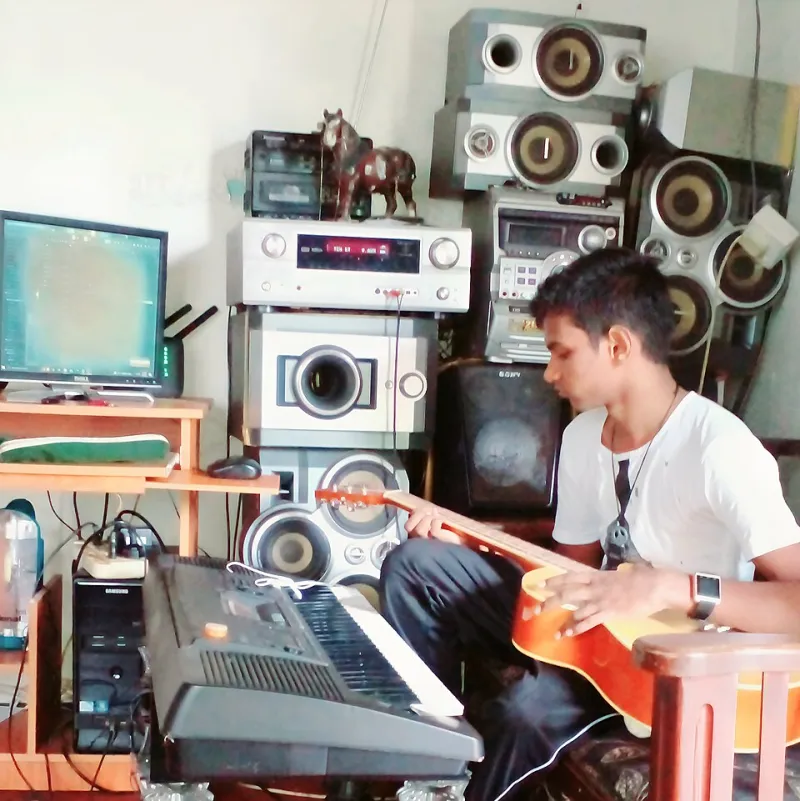
Photo: Randall fisherman, CC BY-SA 4.0, via Wikimedia Commons
Convolution reverb is technically the best reverb. It works by capturing the actual acoustic fingerprint of a real space — a cathedral, a parking garage, a tiled bathroom — and using that data to simulate what any sound would do inside it. It's as close to physically accurate as digital audio gets. It is also, increasingly, not what interesting music sounds like.
The bedroom producers shaping underground electronic, indie, and experimental music right now are doing something different. They're using stock DAW reverbs. Decade-old freeware. Cheap plugin bundle leftovers with weird parameter behavior and artifacts that no acoustic space would ever actually produce. And they're doing it on purpose.
The Problem With Perfect Space
Here's what convolution reverb gets right: the math. The impulse response captures real reflections, real decay curves, real air. Run a snare through a good convolution of Carnegie Hall and it sounds like a snare played in Carnegie Hall. Impressive, accurate, and — for a lot of contemporary producers — completely beside the point.
Realism in reverb creates a specific problem. It places the sound in a recognizable, documentable space. The listener's brain processes it as location rather than texture. You're not hearing the reverb as part of the sound. You're hearing it as context for the sound.
But what if you don't want context? What if you want the reverb to be the sound?
That's the question a lot of bedroom producers are asking, even if they'd phrase it differently. When someone says their mix has "that dreamy washed-out thing" or "that weird hollow space," they're usually describing an algorithmic reverb doing something physically impossible — pre-delays that don't behave like real reflections, diffusion patterns that no room geometry could produce, modulation on the reverb tail that makes the decay shimmer and pulse.
These aren't bugs. They're the whole vibe.
Archaeology in the Plugin Folder
There's a specific kind of producer behavior that's become almost ritualistic in bedroom music communities online: digging through the stock plugins that shipped with an old version of your DAW, or hunting through decade-old freeware repositories, looking for reverbs with personality.
The reverbs people are finding and treasuring tend to share certain qualities. They're computationally cheap, which means the algorithms cut corners in interesting ways. They have parameters that interact unexpectedly — turn the room size up too high and the decay goes metallic, or the pre-delay starts to smear in ways that feel more like tape delay than reflection. Some of them have audible noise floors in the reverb tail itself. Some modulate in ways that feel almost random.
One emerging lo-fi producer based in Chicago describes spending three months with a single reverb plugin — a freeware unit from around 2004 — on every element of an entire album. "It has this thing where the high frequencies in the tail kind of flutter," they explain. "No other reverb does that. It's mine now."
That possessive relationship with a specific algorithm's quirks is something you hear over and over in these conversations. The broken reverb becomes a signature. A fingerprint. Something that can't be easily replicated because it depends on a specific combination of code, parameter settings, and the particular way that old algorithm misbehaves.
Why Imperfect Space Feels More Honest
There's a cultural dimension here that goes beyond technical preference. A lot of the music being made in bedrooms is explicitly about interiority — about the specific emotional texture of being alone in a small room with headphones and feelings. Pristine, realistic reverb contradicts that. It says: this sound happened in a large, well-designed acoustic space. That's a lie.
A glitchy, algorithmically weird reverb says something else. It says: this sound happened in an imaginary space that doesn't exist anywhere except this recording. It's honest about its own unreality. And paradoxically, that honesty makes it feel more emotionally true to the context in which the music was made.
This connects to something interesting in Japanese aesthetics — the concept of ma, the meaningful space between things, the pause, the gap. In traditional Japanese music and architecture, empty space isn't absence. It's presence. A different kind of presence. The weird reverb tail of a buggy stock plugin creates a kind of ma — a space that isn't real but is felt. The algorithm's imperfection becomes the emotional content.
The Case Against Upgrading
Conventional wisdom in home recording communities is that you should always be upgrading your tools. Better plugins, better samples, better monitoring. The path to professional sound runs through better gear.
But a meaningful counter-current has developed, especially among producers whose aesthetic is explicitly lo-fi or experimental. For these artists, upgrading the reverb would be a catastrophic mistake. It would sand away exactly the quality that makes their sound theirs.
This creates a weird relationship with obsolescence. Software that any serious engineer would consider outdated becomes precious. A reverb plugin that hasn't been updated since the Obama administration might be the cornerstone of an entire artistic identity. The bugs aren't getting patched. The limitations aren't getting lifted. That's the deal.
"I've had people tell me to just use a better reverb," says one ambient producer whose work has racked up millions of streams on Spotify. "And I'm like — better according to what? More accurate? I don't need accurate. I need mine."
What the Algorithm Is Actually Saying
When you strip back the technical language, what these producers are really doing is listening to software as an expressive instrument rather than a neutral tool. The reverb plugin isn't just processing the signal. It's adding something — a character, a color, a set of artifacts that carry emotional weight.
In that sense, choosing a reverb isn't that different from choosing an instrument. A Telecaster and a Les Paul both play notes, but they say completely different things. A perfect convolution reverb and a glitchy 2004 freeware unit both add space, but they say completely different things.
The bedroom producers doing this work are, in their own way, expanding the instrument list. The plugin with the weird flutter in the high frequencies is an instrument. The stock DAW reverb that gets metallic when you push the room size is an instrument. The artifacts are the notes.
Limitation as Launching Pad
There's a long tradition in American music of constraints producing creativity. Early hip-hop producers worked with limited samplers and made that limitation the point. Punk worked with limited technique and made that the point. Lo-fi indie did it with four-tracks. The specific character of each movement's sound came directly from what those artists couldn't do.
Bedroom reverb archaeology fits right into that tradition. The constraint isn't financial — most of these producers could afford better tools. The constraint is chosen. It's philosophical. The question isn't "what's the best reverb?" It's "what does this specific broken algorithm do that nothing else does?"
The ghost room in your stock plugin folder has been waiting there the whole time. You just had to stop trying to make it sound real.