Tape Won't Die: Bedroom Producers Are Letting Cassettes Rot Their Music on Purpose
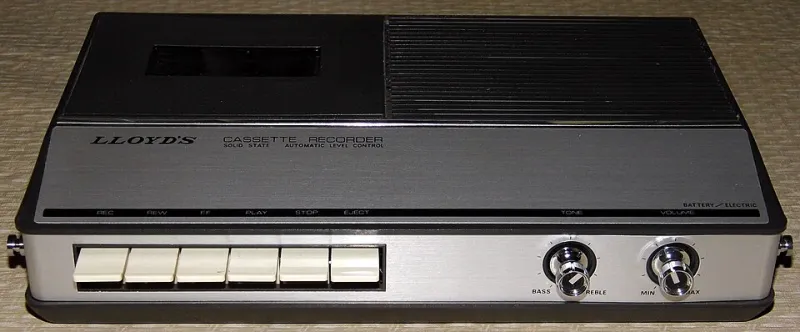
Photo: Joe Haupt from USA, CC BY-SA 2.0, via Wikimedia Commons
Somewhere in a one-bedroom apartment in Portland, there's a Tascam Portastudio from 1987 that hasn't worked correctly in years. The heads are worn. The pinch roller is slightly off. The tape it uses — whatever's left of a bulk-buy lot from a thrift store — stretches and wobbles in ways that no engineer would sanction. And the producer who owns it considers it the most valuable piece of gear in their setup.
This is not nostalgia. This is craft.
The Texture Nobody Asked For (And Now Everyone Wants)
Cassette tape's sonic fingerprint is genuinely strange when you describe it clinically: a narrow frequency response that rolls off both the deep lows and the crisp highs, a persistent background hiss, magnetic saturation that softly clips transients, and the occasional dropout where the signal just briefly vanishes. By any technical measure, it's a medium that degrades audio. By the current standards of a significant corner of indie electronic and bedroom pop production, it's a medium that improves it.
The resurgence isn't entirely new — lo-fi hip-hop was building on cassette aesthetics years ago — but what's happening now feels different in its intentionality. Producers aren't just sampling old tape recordings for nostalgic warmth. They're actively engineering tape decay into their workflow, treating entropy as a compositional element.
"There's a specific thing that happens when audio saturates on tape," explains Kieran Myles, a bedroom producer and sound designer based in Chicago who releases music under the name Hollow Ferrite. "The transients get rounded off, the midrange gets pushed forward, everything kind of glues together in a way that no plugin has ever fully replicated. You can get close. You can get really close. But the real thing has this organic inconsistency that digital just can't fake."
The Plugin Gap and Why It Matters
The tape simulation plugin market is massive and getting bigger. IK Multimedia, Arturia, Waves, UAD — virtually every major plugin developer has at least one tape emulation product, and some of the modeling work is genuinely impressive. These tools capture a lot of what makes tape sound like tape: the saturation curve, the frequency response shaping, the noise floor.
What they can't fully capture is aging. A plugin models a tape machine in a specific state of calibration. Real vintage tape machines exist in a constant state of becoming something else — heads slowly wearing, motors drifting, oxide shedding from old tape stock. The degradation isn't static; it's a process. And that process is exactly what a growing number of producers are after.
This is part of why actual hardware has made such a stubborn comeback even as software gets more sophisticated. A $40 thrift store cassette deck can do something a $300 plugin can't: it can surprise you. It can fail in ways you didn't plan for. And in a production context where everything is otherwise controlled with surgical precision — every beat quantized, every pitch corrected, every mix element sitting in a mathematically determined frequency slot — surprise has real value.
The Wabi-Sabi of Sound Design
There's a Japanese aesthetic concept that feels relevant here, which is maybe why it keeps coming up in conversations about this stuff even in American bedroom producer communities. Wabi-sabi — the beauty of imperfection, transience, and incompleteness — has become something like an unofficial philosophy for a generation of producers who grew up with perfect-sounding digital tools and found them somehow unsatisfying.
The appeal isn't really about sounding old. It's about sounding mortal. Digital audio, at its cleanest, sounds like it exists outside of time. Tape audio sounds like it was made in a specific room on a specific afternoon, and that afternoon is slowly receding. There's an emotional charge in that — a sense of presence that pristine recordings often lack.
Producer and visual artist Sable Okonkwo, who records under the name Moth Signal and has built a small but devoted following through her Instagram and Bandcamp, describes it this way: "I want my music to feel like it could disintegrate. I want people to feel like they're catching it before it's gone. Tape does that. It's already halfway gone when you record on it."
The Workflow: How Producers Are Actually Doing It
The approaches vary widely, which is part of what makes this scene interesting rather than prescriptive. Some producers are running finished digital mixes through cassette decks and then re-digitizing the output — a process sometimes called "tape baking" in online communities, though that term technically refers to something else entirely. The result is a mix that carries tape's sonic signature without requiring the original recording to have been made on tape.
Others are going further upstream, recording initial elements directly to cassette before transferring them to a DAW — capturing drums, synths, or vocals to tape first, then building the rest of the track around those textured building blocks. The tape-recorded elements act as an anchor, giving the whole mix a coherent analog quality that's hard to achieve by applying tape emulation at the end of the signal chain.
And then there are producers who've gone fully analog for specific projects, recording and mixing entirely to cassette, embracing every limitation that entails. The results are uneven by design — some tracks barely hold together, others achieve a fragile intensity that more polished recordings can't touch.
Old Tape, New Meaning
There's also something happening with tape stock itself that's worth paying attention to. Producers are hunting down old, partially degraded cassette tapes — used tapes from thrift stores, dusty lots from estate sales, tapes that have been sitting in hot attics for decades — specifically because the oxide has already started to shed, the magnetic signal is already partially compromised. Recording over these tapes means the new audio inherits whatever ghosts the old tape carries.
It's a production philosophy that treats history as a raw material. The tape isn't just a medium; it's a collaborator with its own accumulated damage.
In a landscape where most music is made with tools designed to eliminate exactly this kind of unpredictability, the choice to invite it back in is genuinely countercultural. It's a small rebellion against the tyranny of the clean take — and if the sounds coming out of bedroom studios from Portland to Brooklyn to Austin are any indication, it's a rebellion that's only getting louder.
Even if the signal keeps dropping out.