Melt the Circuit: How Producers Are Torturing Synths Into Something That Actually Feels Alive
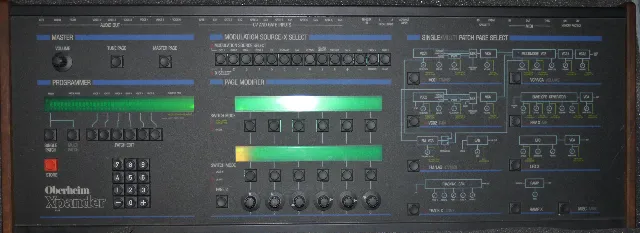
Photo: Bill.lay, CC BY-SA 3.0, via Wikimedia Commons
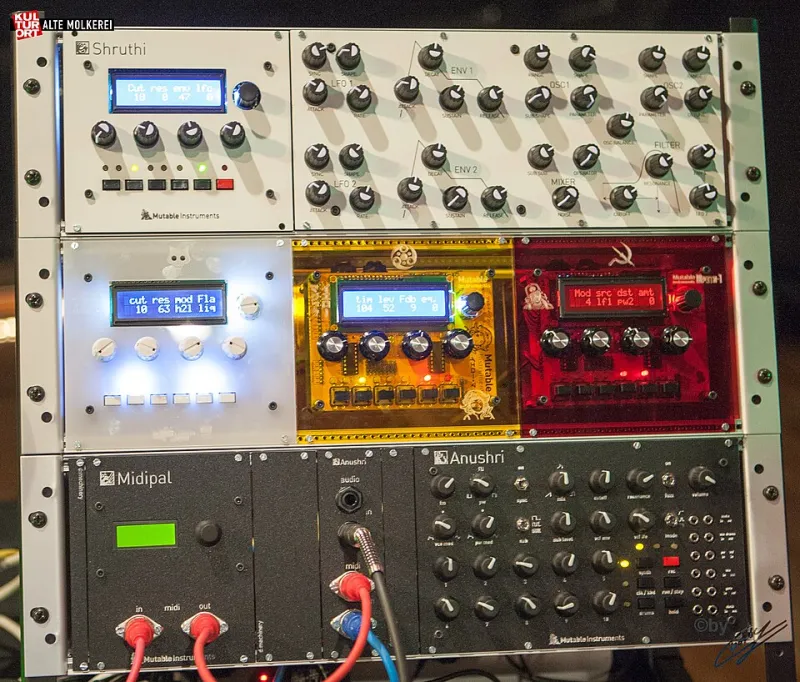
There's a specific kind of violence happening in home studios across the country right now. Not the kind you call anyone about — the kind where a producer cranks an input gain until a synth patch starts folding in on itself, warping into something jagged and unrecognizable. They hit record. They do it again. They keep the take where it sounds the most wrong.
This is saturation as intent. Distortion as the destination, not the accident.
The cleaner digital production gets, the more a certain kind of artist wants to drag it through the mud. And synthesizers — instruments that were literally designed to generate perfect, controlled waveforms — have become the preferred target.
Why Synths? Why Now?
It sounds counterintuitive. Synthesizers are precision tools. You program an envelope, set a filter cutoff, dial in your ADSR, and the machine does exactly what you tell it. That predictability was the whole point for decades — it's why synths became the backbone of pop, electronic dance music, and film scoring.
But predictability has a ceiling. There's only so much emotional range you can squeeze out of a sound that behaves exactly as expected. And for producers coming up in a moment saturated with hyper-polished digital releases, that ceiling feels very, very low.
Saturation changes the math. When you drive a synthesizer's signal into a hardware distortion unit, a plugin that simulates analog clipping, or even just a cheap guitar pedal with the gain maxed out, the waveform starts doing things the original designer never planned for. Harmonics multiply. Transients smear. The sound develops what engineers sometimes call "character" — which is really just a polite word for controlled chaos.
The result can be brutal. It can also be weirdly moving.
The Hyperpop Connection
If you've spent any time with hyperpop over the last few years, you already know what maxed-out synthesizer saturation sounds like in practice. Producers in that scene — many of them teenagers working in GarageBand or cheap versions of FL Studio — discovered early that pushing virtual instruments past their intended range created textures that felt genuinely aggressive and emotionally raw in a way that "correct" sound design didn't.
The lead synths on hyperpop tracks frequently sound like they're in physical pain. That's not a glitch. That's the aesthetic. The distortion isn't masking a weak idea — it IS the idea. It communicates urgency, instability, and a kind of digital anguish that maps weirdly well onto how a lot of young people describe their interior lives.
What's interesting is that hyperpop borrowed this instinct from places most of its audience never directly encountered — industrial music, harsh noise, and the Japanese noise scene that gave this very site its name. The lineage runs from Merzbow's walls of obliterated sound through Nine Inch Nails' corroded synth textures all the way to whatever's trending on SoundCloud this week. The throughline is the same: maximum signal degradation as maximum emotional honesty.
Industrial Techno's Brutal Geometry
Over in the club world, industrial techno producers have been running a parallel experiment. The genre has always had a relationship with abrasion, but the current wave is pushing synthesizer saturation into genuinely extreme territory — lead synths that clip so hard they become rhythmic noise elements, bass patches that have been so thoroughly destroyed they function more like percussion than harmonic content.
Producers in this space often talk about saturation as a way to make electronic music feel physically threatening in a live context. A clean sub-bass hits your chest in a club. A saturated, clipped synth bass hits your nervous system. The distortion adds upper harmonics that small speakers and human ears respond to viscerally, almost involuntarily. It's not pleasant in the conventional sense. That's the point.
The Japanese noise tradition is a useful reference here too. Artists like Masami Akita built entire careers on the idea that audio pushed to the point of destruction could be more emotionally direct than anything produced within the boundaries of conventional music-making. Industrial techno producers are essentially applying that philosophy to functional dance music — which is a genuinely weird and interesting tension.
The Paradox of Broken Sound Feeling More Human
Here's the thing that keeps coming up when you talk to producers who work this way: they consistently describe heavily saturated, distorted synth sounds as more "human" than clean ones. That seems backwards. These are machines making inhuman sounds at extreme signal levels. But the logic holds up when you think about it.
Human voices distort. Instruments played hard clip and overdrive. Acoustic sound in the real world has roughness, inconsistency, and harmonic complexity that digital synthesis — in its default state — completely irons out. When you saturate a synth, you're reintroducing some of that complexity artificially. You're making the machine sweat.
There's also something about the loss of control that resonates. A heavily saturated synth patch behaves differently depending on the input level, the temperature of the room, the interaction between plugins in the signal chain. It becomes less predictable. And unpredictability, in music, tends to read as life.
How to Actually Do It
For producers who want to explore this territory, the entry point is simpler than it sounds. You don't need boutique hardware or an expensive studio. A free saturation plugin like Softube's Saturation Knob, a cheap guitar pedal running between your synth and your audio interface, or even just pushing your DAW's channel gain past 0dB and catching the resulting clip can get you somewhere interesting.
The key is treating it as a compositional decision rather than an accident to fix. Record the distorted take. Automate the saturation amount so it swells at specific moments. Layer a clean version underneath to preserve some low-end definition while the top of the signal melts. The texture you end up with won't sound like anything in the plugin library's preset browser. That's the whole point.
Push it until it sounds wrong. Then push it a little more. Somewhere past the breaking point, there's usually something worth keeping.