When the Machine Stutters: Why Digital Breakdowns Are Saying More Than Perfect Production Ever Could
There's a moment in a lot of underground music right now where something goes wrong. A vocal chops into pieces mid-word. A synth pad smears across the stereo field like wet paint on glass. A drum loop stutters, repeats a single sixteenth note eight times, and then just... stops. And instead of feeling like a mistake, it feels like the most emotionally precise thing you've heard all week.
That's not an accident. That's the whole point.
Perfect Is the Problem
Somewhere along the way, production got too clean. Pitch correction ironed out every wavering note. Quantization snapped every performance into a grid so tight it squeezed out all the breath. Streaming platforms optimized for loudness, clarity, and the kind of sonic smoothness that plays well through a Bluetooth speaker at a rooftop party. And for a lot of listeners — especially younger ones who grew up watching the machinery of pop get exposed on TikTok and YouTube breakdowns — that cleanliness started to feel like a lie.
When everything is perfect, nothing is vulnerable. And when nothing is vulnerable, nothing really lands.
So producers started breaking things on purpose. Or more accurately, they stopped fixing them.
The Error as Emotional Signal
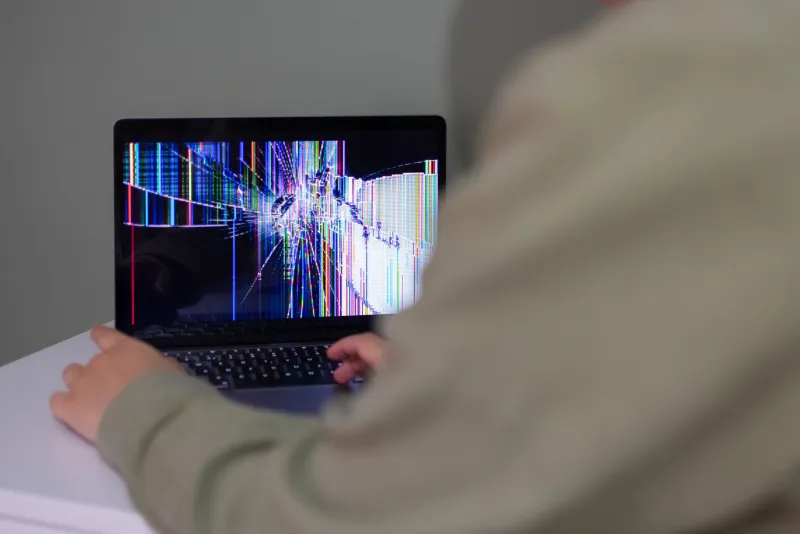
Digital errors have a specific emotional texture that's hard to fake and even harder to ignore. A buffer underrun — when your computer can't process audio fast enough and the signal cuts into a jagged, repeating fragment — sounds like anxiety. Like a thought you can't finish. A bitcrusher cranked too hard sounds like memory degrading, like something you're trying to hold onto slipping through your fingers. A corrupted sample that plays back at half pitch with artifacts crawling across it sounds like grief in a way that a perfectly tuned string arrangement sometimes just doesn't.
This isn't metaphor for the sake of it. Producers working in experimental pop, hyperpop, and the murkier corners of SoundCloud are actively talking about glitch aesthetics in emotional terms. The error communicates something the clean version couldn't. It's not decoration — it's the message itself.
Think about the way a voice crack in a live performance hits harder than a polished studio take. The wobble in the note is the feeling leaking out. Digital breakdown works the same way. The machine stuttering is the emotional equivalent of a voice giving out under the weight of what it's trying to say.
Gen Z Didn't Invent This — But They're Running With It
The lineage here goes back further than most people realize. Japanese noise artists like Merzbow were building entire aesthetic philosophies around sonic destruction decades ago. Onkyo performers in Tokyo were making music from near-silence and sudden electronic collapse while American radio was still playing Matchbox Twenty. Glitch as a compositional language has roots in academic electronic music, in circuit bending, in the hiss and wow of deteriorating cassette tape.
What's different now is the context in which it's being received. Gen Z listeners didn't come to glitch through an academic lens or a noise-music appreciation society. They came to it through lo-fi playlists on YouTube, through hyperpop blowing up on Twitter, through vaporwave's corrupted mall-music nostalgia, through the way a badly compressed voice memo posted to SoundCloud at 2 a.m. somehow sounded more real than anything on Spotify's editorial playlists.
The error became culturally legible as authenticity. And once that association clicked, it spread fast.
The Bedroom Studio as Glitch Lab
One of the things that makes this moment interesting is how democratic the tools are. You don't need a professional studio to introduce meaningful digital breakdown into your music. You need a DAW, a cheap audio interface, maybe a plugin or two — and the willingness to not fix what sounds wrong in the interesting way.
Producers are deliberately routing audio through processing chains that overload. They're using free VSTs designed to simulate hardware failure. They're recording through undersized buffers and keeping the dropout artifacts. They're running vocals through pitch-shifting algorithms at extreme settings until the formants collapse into something alien and emotionally raw.
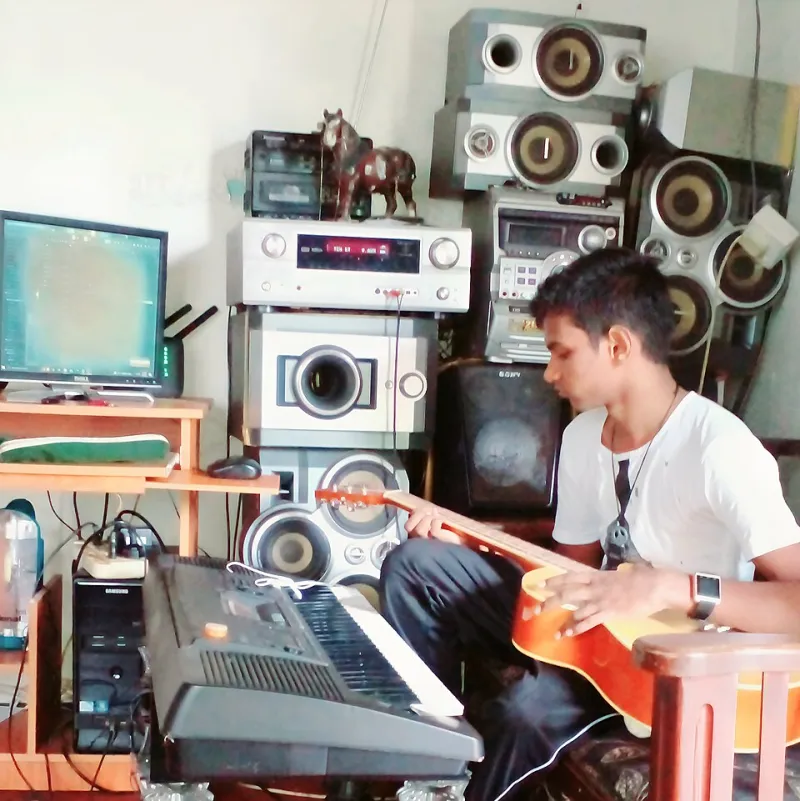
The bedroom studio — already the dominant site of experimental music production in the US — turns out to be a perfect glitch lab. The cheap gear, the consumer-grade converters, the acoustic irregularities of a bedroom or closet: all of it contributes to a sonic environment where breakdown is close to the surface. Instead of fighting that reality, a generation of producers decided to lean into it.
When the Listener Knows the Difference
Here's where it gets complicated: you can fake a glitch, and audiences increasingly know when you are.
Plug-ins that simulate digital error have been around for years, and a lot of them are excellent. But there's a difference between a glitch that arrives in the music as part of a real compositional process — a mistake that got kept, a failure that got built around — and one that's been applied as a texture after the fact, like a filter. Listeners might not be able to articulate the difference, but they feel it.
The glitches that hit hardest are the ones that feel structural. They're not sitting on top of the music; they're load-bearing. The stuttering vocal isn't decorated with a stutter effect — the stutter is the vocal. The broken loop isn't a loop with a glitch plugin on it — it's a loop that actually broke, and the producer decided that was the version.
This is why intentionality matters so much in this conversation. The goal isn't to make music that sounds broken. The goal is to make music where the breaking is doing real emotional work.
Noise as Intimacy
There's something almost paradoxical about this: digital breakdown, which sounds cold and mechanical by definition, has become one of the most intimate sonic textures in contemporary music. The reason is vulnerability. A glitch is a moment of exposure. The machine showing its seams. The production revealing the limits of the system it was made in.
In a media landscape where everything is optimized and every rough edge has been sanded down for maximum palatability, a moment of genuine sonic failure is startling in the best possible way. It's a reminder that there's a person on the other side of the music — someone working with imperfect tools in an imperfect space, making decisions in real time about what to keep and what to let fall apart.
The glitch says: I was here. This was real. I didn't fix it because the broken version told the truth.
And right now, that's exactly what a lot of people need to hear.