Wrecked Wax: The Collectors Paying Good Money for Records Nobody Wanted
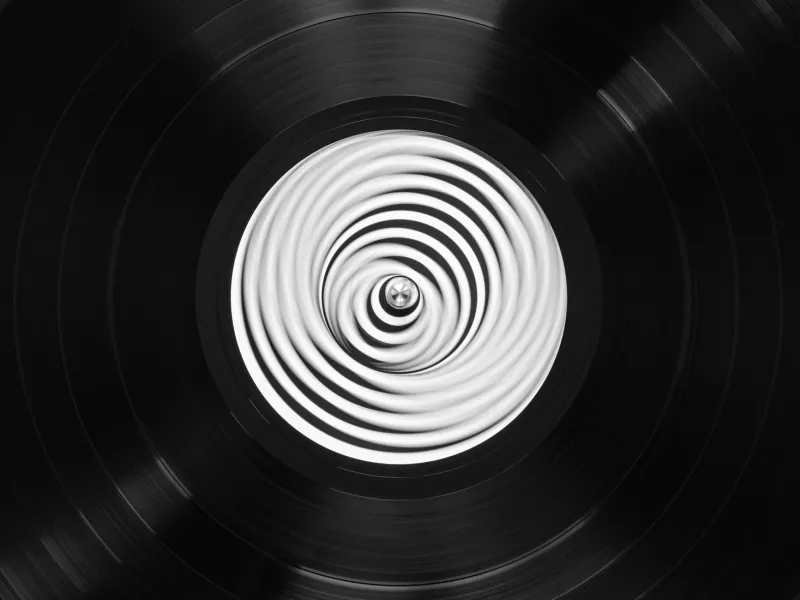
Walk into any decent record store in the US right now and you'll find the usual setup — dollar bins up front, the good stuff in the back, staff picks on the wall. But something weird has been happening in those dollar bins lately. People are actually digging through them with purpose. Not bargain hunting. Not hoping to find a mint copy of something rare. They're looking for the junkers. The skippers. The ones with scratches so deep you can see them from across the room.
This isn't thrift-store desperation. It's a deliberate choice, and it's reshaping how a growing corner of the music world thinks about value, authenticity, and what a record is even supposed to sound like.
The Crack in the Groove
For most of vinyl's history, surface noise was the enemy. Audiophiles spent obscene amounts of money on cleaning systems, anti-static sleeves, and climate-controlled storage just to keep the pops and crackles at bay. The whole point was silence between the notes — a clean signal, an untouched groove, proof that you took care of your collection.
That logic is quietly flipping. A segment of collectors, producers, and sound artists is now actively seeking out records in rough shape, specifically because of the sonic artifacts that come with the damage. The skip that interrupts a chorus. The low-level hiss that sits underneath a piano ballad. The rhythmic crackle that pulses in time with the music like an extra percussion track nobody programmed.
These aren't bugs anymore. They're features.
It Sounds Like Something Actually Happened
Part of what's driving this is a reaction to how clean modern audio has gotten. Streaming has made high-fidelity sound almost absurdly accessible — you can pull a studio-perfect mix out of your phone speaker in a gas station parking lot. That's genuinely impressive, but something got lost in the process. The music started feeling frictionless. Frictionless in a way that, for some listeners, started to feel hollow.
A scratched record sounds like it has a history. It sounds like someone played it at a party in 1974 and set a beer down on it. It sounds like it survived a flood in someone's basement and got dried out on a porch. That damage isn't separate from the music — it becomes part of it. The crackle isn't noise in front of the song. It's noise woven into it.
There's a philosophical thread here that connects directly to Japanese concepts like wabi-sabi — the idea that imperfection and transience aren't flaws to be corrected but qualities to be appreciated. A scratched record isn't a failed version of a perfect record. It's a different object entirely, one that carries time in a way a pristine pressing never could.
Producers Are Mining the Wreckage
Beyond collectors, producers are getting in on this. Bedroom beatmakers have been sampling vinyl crackle for decades — it's basically a lo-fi staple at this point — but the approach is getting more intentional. Instead of layering a generic crackle loop over a track to add warmth, producers are hunting for specific records with specific damage that produces specific sounds.
A warped record played at the wrong speed creates pitch drift that no plugin perfectly replicates. A deep scratch that causes a skip can turn a four-bar loop into something rhythmically unpredictable in ways that feel human and alive. Water damage to the vinyl surface can create a kind of degraded high-end that sits in a mix differently than any EQ curve you'd dial in on purpose.
Some producers are building entire sample packs from damaged records. Not in the lo-fi-chill sense — in a more confrontational, experimental sense. The damage is the point. The artifact is the instrument.
The Market Catches Up
Here's where it gets genuinely strange: prices are moving. Not for every scratched record, obviously, but for the right kind of damaged goods, buyers are paying attention. Certain genres — soul, jazz, exotica, obscure Japanese city pop — in rough condition are getting picked up by producers and artists who used to pass on them. The dollar bin is becoming a hunting ground for people who know exactly what they're looking for.
There's also a growing community of people who document their damaged finds online — not to lament the condition, but to share the specific sound of the damage. Videos of skipping records played on cheap turntables, celebrated for the chaos. Forum threads debating which pressing plants from which eras produce the most interesting degradation patterns when a record gets scratched. It's nerdy in the best possible way.
What This Actually Means
The scratched record trend is part of a broader cultural shift in how a certain generation of music people relate to quality. High fidelity used to mean one thing: accuracy. A perfect reproduction of the original signal. But that definition is getting challenged from a lot of directions at once — through lo-fi production, through the embrace of clipping and distortion as aesthetic tools, through the deliberate use of broken gear.
What's emerging is a different definition of fidelity. Not accuracy to the original recording, but fidelity to the experience of listening — the physical, imperfect, time-stamped experience of a specific record being played on a specific day. Damage is documentation. Crackle is testimony.
A mint copy of a record tells you what the music sounded like in a studio in 1968. A destroyed copy tells you what the music sounded like in someone's life. For a growing number of people, that's the more interesting record.
The Scratch Is the Signature
None of this means mint condition vinyl is going anywhere. The audiophile pursuit of the perfect pressing isn't dying — it's just no longer the only valid relationship you can have with a record. There's room now for both ends of the spectrum, and honestly the conversation between them is more interesting than either camp alone.
But if you haven't dug through a dollar bin in a while, maybe go back. Don't skip over the skippers. Pick up the one with the ring stain and the crack down the label and the scratch that runs from the outer groove almost to the center. Take it home and drop the needle.
It might sound like nothing. Or it might sound like exactly what you didn't know you were looking for.