Wrong Notes, Right Feeling: How Underground Producers Are Weaponizing Out-of-Tune Synths
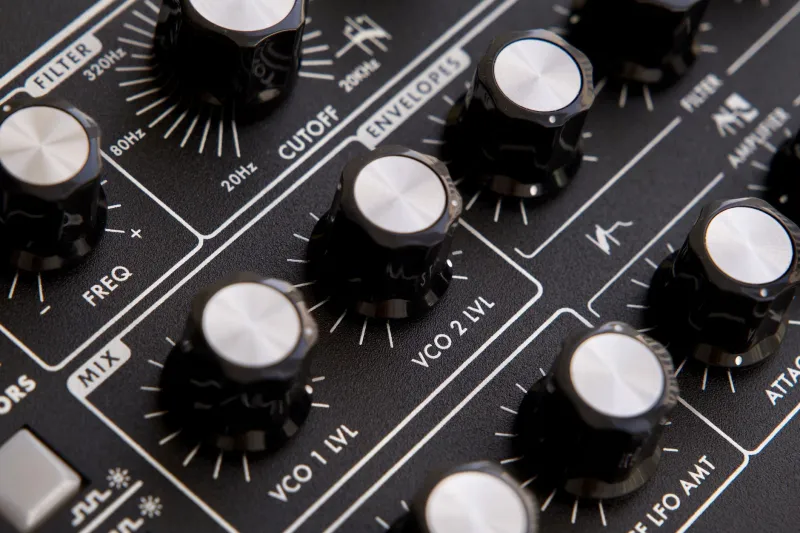
There's a specific kind of discomfort that hits when a synth is just slightly off. Not broken, not random — just wrong enough to make your brain itch. You can't quite place it. Your ear keeps reaching for resolution that never comes. And right there, in that unresolved tension, is where a whole pocket of underground producers has decided to set up shop permanently.
Microtonal production — using pitches that fall between the standard twelve semitones of Western equal temperament — has been a fringe concept in academic music circles for decades. But lately it's been bleeding into bedroom studios, underground hip-hop beats, and experimental electronic releases in a way that feels less like theory and more like instinct. Producers aren't necessarily reading Harry Partch manifestos before they sit down at their rigs. They're just turning the tuning knob a few cents in the wrong direction and chasing whatever weird thing comes out.
The Space Between the Notes
Western music locks pitch into a grid. Twelve notes, clean ratios, everything mapped and named. It's a system that's incredibly practical and, if you've grown up inside it your whole life, almost invisible. You don't hear the grid — you just hear music.
Microtonal pitch lives outside that grid. It's the frequency your ear doesn't have a word for. In traditional Japanese music, in Indian classical ragas, in Middle Eastern maqam scales — non-Western musical traditions have always known that the space between Western semitones is rich territory. The Western grid just decided to pave over it.
What underground producers are doing now is digging up that pavement. Sometimes consciously, sometimes by accident. Producer and beatmaker Sable Drift, who releases music out of Portland and has been building a quiet following in experimental hip-hop circles, describes his process as "tuning by feel."
"I'll set a synth to something standard and then just start drifting the oscillator until something feels right in my chest," he explains. "Usually that's not A440. Usually that's somewhere that doesn't have a name on a piano."
The result across his catalog is a kind of hovering unease — chords that feel emotionally legible but harmonically wrong, melodies that sound like they're reaching for something just out of frame.
Drift as a Design Choice
The technical side is more accessible than it's ever been. Vintage analog synths have always had unstable oscillators — that slight warble and drift was considered a flaw for decades, something manufacturers tried to engineer out. Now producers are hunting for that instability specifically. A Juno that won't hold perfect pitch isn't broken; it's seasoned.
Software has caught up too. Plugins like Scala, Surge XT, and various microtuning-capable synths let producers map custom tuning tables to their keyboards, effectively rebuilding the musical scale from scratch. You can design a scale with seventeen notes per octave, or tune every key to a different ratio derived from the harmonic series, or just detune one specific note by thirty-seven cents because it sounds like grief.
Producer and sound designer Yuki Harmon, based in Chicago, uses microtuning to create what she calls "emotional interference patterns."
"When two frequencies are close but not identical, they beat against each other," she says. "That beating — that pulse — it's not a note, it's a feeling. I want that feeling in the track. I want the listener's body to notice something their brain can't categorize."
Harmon's work sits in a space between ambient electronics and experimental R&B, and the microtonal elements give her productions a texture that's hard to describe but immediately recognizable. It sounds like the emotional equivalent of static.
Hip-Hop's Crooked Frequencies
In underground hip-hop, microtonal drift has been creeping in through a different door. Sample-based producers have always worked with found sounds — and found sounds don't care about A440. A tape recorded in 1973 might be running slightly fast or slow. A vinyl pressing might be mastered at a different reference pitch. When you chop that sample and build a beat around it, you're already working in a non-standard tuning universe.
Some producers have started leaning into this rather than correcting it. Instead of pitch-shifting a sample to match standard tuning, they tune everything else to match the sample — drums, bass, synth stabs, all of it nudged into the sample's native frequency world. The result is a beat that feels internally coherent but sits slightly outside the listener's calibrated expectation. It creates a kind of pressure. A persistent, low-grade wrongness that makes the track feel more alive than a perfectly tuned alternative ever would.
Producer Cassian Wells, who works out of Atlanta and has been releasing beat tapes under various aliases for the past several years, calls this approach "finding the record's true key."
"The record already knows what it wants to be," he says. "My job is to figure out what frequency it actually lives on and build around that, not drag it somewhere it doesn't want to go."
Why It Works on a Gut Level
There's a real psychoacoustic reason microtonal sounds hit differently. The human auditory system is wired to detect small pitch discrepancies — it's a survival mechanism, a way of identifying whether two sounds are the same source or different sources. When a pitch sits just outside the expected grid, the brain flags it. Not as danger, exactly, but as attention required.
That low-level alert state is exactly what a lot of these producers are chasing. It keeps the listener slightly on edge, slightly engaged, unable to fully relax into the music the way they would with something perfectly tuned and resolved. The discomfort is the point. The itch that never quite gets scratched is the point.
There's something in this that maps onto the broader Mikunigaoka Fuzz aesthetic — the idea that damage, distortion, and wrongness can be more emotionally honest than pristine correctness. Microtonal drift is just distortion applied to pitch rather than timbre. It's the same impulse that drives producers to blow out their gain stages or let their tape hiss sit high in the mix. The imperfection is the signal.
The Wrong Note That Sounds Right
What's interesting about the microtonal underground is how it's arriving at something that non-Western musical traditions have always known: the Western twelve-tone grid is a choice, not a law. It's one way to organize pitch, not the only way, and not necessarily the most emotionally expressive way.
Producers who've never studied ethnomusicology are independently rediscovering this through trial and error, through broken gear and tuning knobs turned too far and samples that don't quite fit. They're arriving at the same place from a completely different direction.
Sable Drift puts it simply: "Every time I detune something and it suddenly makes sense emotionally, I think — why did we ever agree to only use twelve notes? Who decided that was enough?"
Nobody decided it was enough. They just drew the grid and called it music. The producers working in the cracks between those lines are just reminding everyone that the grid was always optional.