Bleed the Mic: How Gen Z Producers Turned Clipping Vocals Into a Badge of Honor
Somewhere between a laptop mic taped to a closet wall and a $3,000 condenser sitting in a treated room, something got lost. The polish. The safety. The careful, clinical distance that used to separate a "professional" recording from everything else. And a whole generation of producers decided they didn't want it back.
They want the clip. They want the bleed. They want the moment the signal breaks.
Clean Is a Lie
If you've spent any time in DIY music circles — SoundCloud comment sections, Bandcamp rabbit holes, the kind of Discord servers that stay active until 4 a.m. — you've probably noticed that something shifted in what "good" sounds like. Tracks that read as overproduced get scrolled past. Vocals that sit too neatly in the mix feel distant, corporate, fake. The ear has been recalibrated.
A lot of producers will tell you this started as a necessity. You work with what you've got — a cheap USB mic, a bedroom with parallel walls, no acoustic treatment beyond a hoodie draped over a chair. But somewhere along the way, the constraints became the aesthetic. The distortion stopped being something to fix and started being something to chase.
"I recorded a vocal take once and my gain was way too hot," says one producer who makes hyperpop-adjacent stuff out of his apartment in Chicago. "It was clipping all over the place. And I kept it. It sounded more like me than anything I'd done before."
That's the thing nobody in a formal recording program tells you: sometimes the broken take is the true one.
What Clipping Actually Does to a Vocal
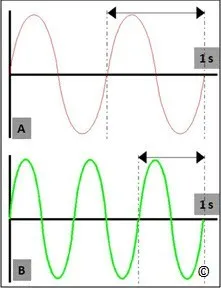
Let's get into the mechanics for a second, because it matters. When a signal exceeds what a converter or a limiter can handle, it clips — the waveform gets sheared at the top and bottom, turning smooth sine curves into something closer to a square wave. In analog gear, that process introduces harmonic saturation that can sound warm, even musical. In the digital world, it's harsher, more aggressive. It bites.
That bite is exactly what younger producers are after.
Pushing a vocal through a hard clipper — or just cranking the input gain until the interface's red light is basically a permanent fixture — creates a texture that sits differently in a mix. It's physically louder in perceived terms, even before mastering. It cuts through. But more than the technical outcome, it feels like something. There's urgency in a clipped vocal. Desperation. A sense that the person singing didn't have time to set the levels correctly because what they were saying couldn't wait.
That's not an accident. That's the whole point.
The Authenticity Economy
We're living through a weird cultural moment where authenticity has become one of the most commercially valuable things a musician can project — and also one of the easiest things to fake. Every major label has a team of people trying to make their artists sound "raw." Every streaming algorithm is rewarding vulnerability. The market for realness has never been bigger, which means the signals that used to mark realness are getting diluted fast.
Clipping cuts through that noise — literally.
A vocal that's been pushed until it distorts carries information that a clean vocal doesn't. It says: this was recorded in a space that wasn't built for recording. It says: the person behind the mic wasn't thinking about headroom. It says: something was more important than getting the levels right. That's a story. And listeners, especially younger ones who've grown up surrounded by content that's been optimized to death, can feel the difference between a story and a press release.
The Japanese concept of wabi-sabi — finding beauty in imperfection, in the incomplete, in the weathered — maps onto this pretty cleanly, even if the producers doing it have never heard the term. There's an acceptance built into a clipped vocal. An acknowledgment that the moment was more important than the artifact.
Techniques People Are Actually Using
So how does this actually get done? Because there's a difference between accidental clipping and deliberate clipping that still sounds intentional rather than just sloppy.
A lot of producers are using gain staging as a weapon — hitting a preamp hard before the signal even reaches the DAW, so the distortion is baked in at the source. Others are running vocals through hardware limiters with the threshold set way too low, letting the unit smash the transients into something brutal. Some are doubling clipped takes with clean ones, using the distorted version as a kind of texture layer underneath a more intelligible lead.
Plugins like Kazrog's True Iron, Decapitator, or even just the stock saturation tools in Ableton are getting pushed further than their manuals suggest. There's a whole community of people on forums comparing notes on which clippers introduce the most "interesting" artifacts — which ones add harmonics that feel like tape, which ones just make things sound like a broken speaker, and why both of those can be exactly right depending on the song.
The vocal doesn't need to be completely destroyed. Sometimes it's just a whisper of distortion on the peaks. Sometimes it's the whole thing run through a clipper until the words barely survive. The spectrum is wide, and producers are mapping it out in real time.
When the Red Light Becomes the Signal
There's something almost ritualistic about the way some producers talk about this. The red clip indicator on an interface isn't a warning anymore — it's confirmation. You hit it, and something happened. The mic screamed. The signal broke. You got something.
It connects back to a broader thread running through experimental and underground music for decades: the idea that the most honest sounds are the ones that exist at the edge of what gear can do. Jimi Hendrix blowing speaker cones. Early hip-hop producers sampling records that were already degraded. The entire lineage of noise music treating equipment failure as composition.
Gen Z didn't invent this. But they've democratized it in a way that feels genuinely new. You don't need a wall of vintage gear to make something that sounds like it's coming apart at the seams. You need a laptop, a cheap mic, and the willingness to stop treating the red light as something to avoid.
The Sound of Showing Your Work
Maybe what clipped vocals are really doing is showing the seams. In a media environment where everything is filtered, corrected, and optimized before it reaches an audience, the imperfection becomes proof of process. You can hear that someone was actually in a room, actually making noise, actually struggling with something.
That's not nothing. In fact, right now, that might be everything.
The bedroom producers pushing their mics past the breaking point aren't being careless. They're making a deliberate choice to let the recording carry the weight of the moment it was made in — distortion, clipping, and all. And when it lands right, it sounds like the truest thing you've heard all week.