The Take That Broke Everything (And Became the Album)

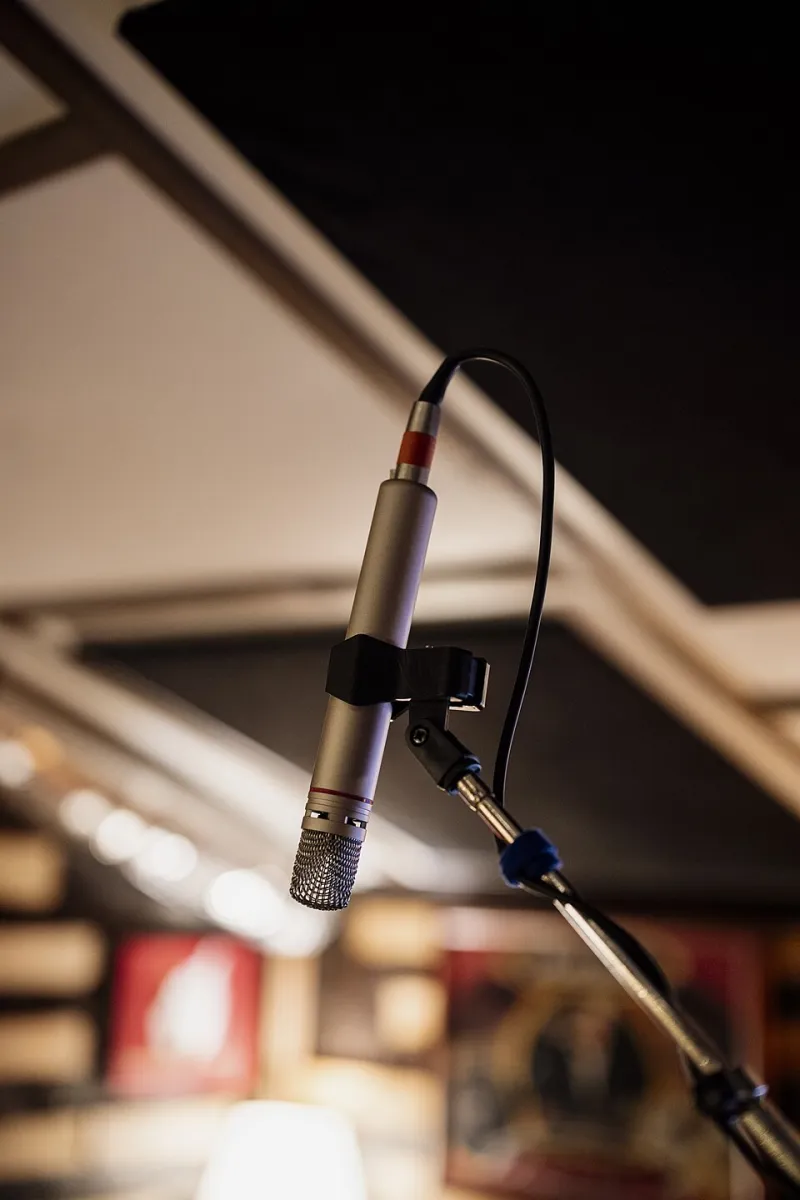
Photo: Unknown authorUnknown author, Public domain, via Wikimedia Commons
Somewhere in a bedroom studio in Portland, a producer hits record, fumbles a drum pattern, and accidentally leaves a mic too close to a monitor. The feedback squeals. The take is ruined. And then — instead of hitting delete — they listen back and realize the whole thing sounds absolutely alive.
That moment, multiplied across hundreds of home studios and project rooms across the US right now, is quietly reshaping how experimental and indie producers think about the creative process. The mistake isn't the enemy anymore. It's the collaborator.
Failure as First Draft
There's a long tradition in Japanese aesthetics of finding value in imperfection — wabi-sabi, the beauty of the incomplete and the worn. It's a philosophy that sits right at the heart of what Mikunigaoka Fuzz has always been about: noise as honesty, distortion as expression. And it maps surprisingly well onto what a new wave of American producers is doing with their broken takes.
The idea is simple on the surface. Instead of treating a failed recording as something to fix or trash, you treat it as raw material. A drum pattern that stutters at the wrong bar becomes a rhythmic hiccup that makes the groove feel anxious and alive. A vocal double that came in half a beat late becomes a ghost effect no plugin could convincingly replicate. Feedback that shouldn't have happened becomes the hook.
But the practice goes deeper than just keeping your outtakes. The producers doing this most deliberately are actually building workflows designed to generate failure at scale — and then curating what survives.
Building a Machine for Mistakes
Producer and sound designer Ren Calloway, based out of Chicago, describes his setup as "a trap for happy accidents." He runs analog gear through a signal chain with intentionally mismatched impedances, records everything live with no click track, and keeps his interface gain riding just above where most engineers would consider safe. The result is a session full of clips he'd never have planned.
"I stopped trying to control the room," he says. "Now I just document what happens and sort it out later. Half my library is stuff I technically screwed up."
This kind of deliberate chaos has roots in the noise and experimental traditions — Merzbow's confrontational walls of sound, the circuit-bent toys of early 2000s DIY scenes, the tape manipulation that defined a certain era of Japanese avant-garde music. But what's different now is how accessible and intentional the process has become for producers who are making music that's meant to be heard by regular people, not just gallery audiences.
The goal isn't chaos for its own sake. It's about mining chaos for the moments that feel true.
The Vocal Double That Nobody Planned
Unintentional vocal doubles — where a singer's voice bleeds into a second take, or where two passes sync up imperfectly and create a fluttering, almost choral effect — are having a serious moment. Producers in indie pop and experimental R&B circles have started leaving these in not as a stylistic nod, but because they communicate something that a clean, quantized vocal stack simply can't.
There's a fragility to an accidental double. You can hear the human behind it. The slight pitch drift, the breath in the wrong place, the way the two takes argue with each other just slightly — all of that adds up to something that sounds less like a product and more like a person.
Some producers have gotten so into this that they're now engineering sessions specifically to create the conditions for accidental doubles. Running takes without headphones so the vocalist can hear themselves slightly delayed through the room. Recording in spaces with natural reflections that bleed back into the mic. Setting up situations where the performance is slightly off-kilter from the start.
Mic Feedback as Texture, Not Trauma
Feedback is one of those sounds that makes most engineers immediately reach for the fader. It's loud, it's unpredictable, and if you let it run, it can damage speakers and ears. But controlled — or semi-controlled — feedback has a tonal richness that's genuinely hard to fake.
A handful of producers are now treating feedback like a sustained instrument. They'll bring a mic toward a monitor at a specific angle, find the frequency that wants to sing, and hold it there long enough to capture the harmonic overtones that bloom above the fundamental. Run that through some saturation and a little reverb and you've got a texture that sounds almost orchestral — and absolutely nothing like something you'd find in a sample pack.
The Japanese noise tradition understood this intuitively. Feedback isn't a flaw in the system; it's the system talking back. The circuit completing itself. There's a kind of honesty in that sound that processed, curated audio often loses.
The Curation Problem
Here's where it gets complicated: if you're generating mountains of accidental material, you still have to decide what makes the cut. And that curation process is its own creative act — maybe the most important one.
The producers doing this well have developed a kind of editorial instinct that's different from traditional music production. They're not asking "does this sound good?" in the conventional sense. They're asking "does this sound specific?" Does it have a personality? Does it feel like it came from a real moment that couldn't have been repeated?
That specificity is the whole point. In an era where producers have access to identical sample libraries, identical plugin chains, and identical AI tools, the thing that makes a track stand out is often the thing that can't be reproduced — the mistake that happened once and only once.
Imperfection as Signature
There's a reason listeners keep coming back to certain artists and producers even when — especially when — the music sounds a little rough around the edges. The imperfection signals authenticity. It says: a human made this, under real conditions, and something unexpected happened, and they were brave enough to leave it in.
That's not a new idea. But the producers leaning into it hardest right now are doing something more than just leaving in the rough edges. They're building systems that make the rough edges inevitable — and then they're listening hard enough to know which ones mean something.
The take that breaks everything isn't always a disaster. Sometimes it's just the record finally telling you what it wants to be.