The Sound of Nothing: How Chasing Pure Silence Became the Most Radical Move in Music
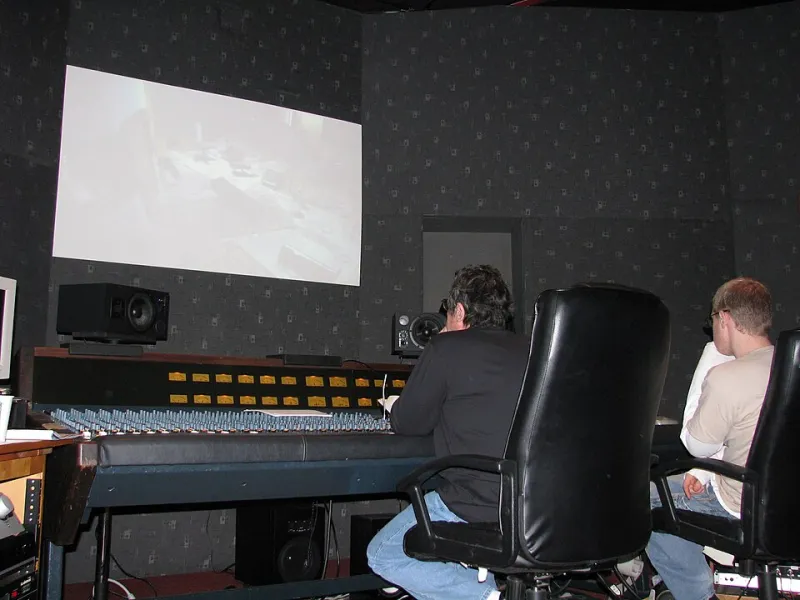
Photo: Jason Meredith, CC BY 2.0, via Wikimedia Commons
There's a room in the basement of a recording facility outside of Nashville that makes people uncomfortable. Not because of what's in it — but because of what isn't. No hum. No air conditioning bleed. No distant traffic. No 60-cycle hum from a light fixture two floors up. Just a density of quiet so complete it starts to feel physical, like something pressing against your eardrums from the inside.
This is an anechoic chamber, and engineers pay serious money to get near one. Increasingly, so do producers who've spent the last decade soaking their music in grain, tape hiss, and glitch — and who've now decided that the most transgressive thing they can possibly do is make something clean.
Distortion as Default
Let's be honest about where we are. The sonic landscape of 2024 is saturated. Vinyl warmth, lo-fi aesthetics, blown-out 808s, bitcrushed everything — distortion has become so embedded in the culture that it's basically the wallpaper. Which means, paradoxically, that the rarest texture you can introduce to a mix right now might be none at all.
Producers and engineers working in experimental and indie spaces are starting to notice this. The conversation has shifted from how do we make this sound broken to what happens if we make this sound like nothing has touched it?
"There's an aggression to pristine sound that people don't talk about," says one mixing engineer based in Los Angeles who works across jazz, ambient, and left-field pop. "When everything around you is gritty and warm and saturated, dropping something genuinely clean into the world is kind of a violent act."
What Clean Actually Costs
Here's the thing about silence: it's expensive. Like, genuinely, absurdly expensive.
Achieving a truly low noise floor isn't just about buying a good microphone. It involves acoustic isolation that can run into six figures for a purpose-built room. It means power conditioning to scrub electrical interference from the grid. It means microphone preamps that cost more than most people's cars, analog-to-digital converters that are specced to a precision most listeners will never consciously register, and cable runs managed with a level of obsession that borders on clinical.
And then there's the human side of it. Recording in a dead room requires performers to sit with a silence that most people find deeply unsettling. Session musicians have walked out. Vocalists have reported feeling exposed in a way that goes beyond normal studio anxiety — like the room is listening back.
One producer who works out of Brooklyn and asked to stay anonymous described a session where a guitarist physically couldn't play. "He kept saying something felt wrong. The room was too quiet. His brain was looking for something to latch onto and there was nothing there. We ended up having to pipe in a subtle pink noise just so he could function."
That detail lands differently once you sit with it. We've become so conditioned to ambient sonic texture that its complete absence can feel like sensory deprivation.
The Japanese Angle
There's a concept in Japanese aesthetics called ma — often translated as negative space, or the meaningful pause. It's the silence between notes in a shamisen performance, the empty room in a traditional painting, the gap that gives shape to everything around it. Ma isn't the absence of something. It's a presence in its own right.
The producers chasing zero noise floor aren't really chasing nothing. They're chasing ma. The silence they're building toward is a structural element — a frame that makes everything placed inside it sharper, more intentional, almost uncomfortably present.
This is where the Mikunigaoka Fuzz lens gets interesting. This site exists in the space where noise is the medium, where distortion is the message. But even here, you can't talk about the beauty of broken sound without acknowledging what it's broken from. The fuzz only means something because we know what clean sounds like. The rebellion only lands if you understand what's being rebelled against.
Chasing silence is just the same obsession flipped over.
Minimalism as Extremism
Call it noise floor minimalism. It's got the same energy as any other form of sonic extremism — the same total commitment, the same willingness to spend unreasonable amounts of money and time in pursuit of something most listeners won't consciously identify. The difference is that instead of pushing toward maximum degradation, these engineers are pushing toward maximum transparency.
And like most forms of extremism, it reveals something about the culture it's reacting to.
The fact that clean sound has become rare enough to feel radical tells you everything about where we've ended up. We live in an era of intentional imperfection — vinyl pops on Spotify playlists, lo-fi study music generated by algorithms, plugins that add fake tape hiss to digital recordings. Imperfection has been commodified so thoroughly that it's lost most of its meaning. It's the safe choice now. The expected texture.
Which means the unsafe choice, the genuinely unexpected move, is to strip all of that away and let the recording breathe in silence.
The Gear Obsession
Spend any time in the forums where this conversation is happening and you'll encounter a level of gear nerdery that makes regular audiophile culture look casual. People are discussing the noise characteristics of specific capacitor brands. There are lengthy threads about whether certain vintage console components introduce desirable noise — and the answer, in this context, is increasingly no.
The reference points are things like Deutsche Grammophon classical recordings from the 1960s, certain Blue Note jazz sessions, early digital recordings from the 1980s that were criticized at the time for sounding sterile but are now being reassessed as documents of a particular kind of sonic courage.
One engineer described spending three weeks rewiring an entire studio signal chain specifically to eliminate a noise floor issue that measured at -110 dBFS. That's a level of quiet that no human ear can consciously detect. And yet.
"It's not about what you hear," she explained. "It's about what you don't have to hear. The absence changes the quality of your attention. You start listening differently when there's nothing to hide behind."
Nothing to Hide Behind
Maybe that's the real point. In a culture that's learned to use noise as cover — to hide rough performances behind saturation, to make low-budget productions feel intentional by leaning into their limitations — the producers going the other direction are making a different kind of statement.
They're removing the safety net. They're saying: here is the sound, with nowhere to hide, in a room so quiet it makes musicians uncomfortable, recorded through gear that costs more than a down payment on a house, mixed with a precision that most people will never consciously appreciate.
Is it art? Is it obsession? Is it both?
At Mikunigaoka Fuzz, we spend a lot of time thinking about how beautiful broken things can be. But sometimes the most broken thing you can do is refuse to break anything at all.