Always On: How Producers Are Mining the Hum of Modern Life for Pure Gold
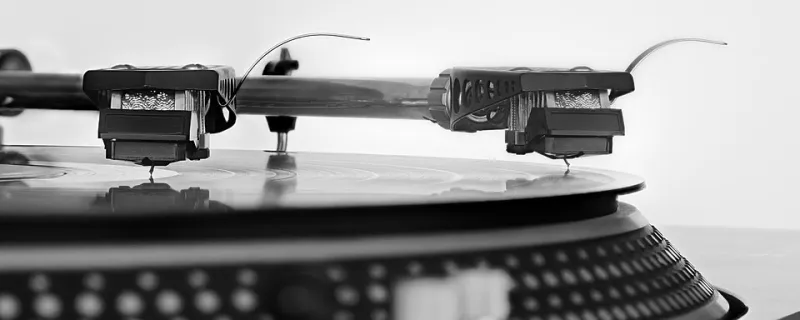
Photo: Franz van Duns, CC BY-SA 4.0, via Wikimedia Commons
There's a sound happening right now in whatever room you're sitting in. Maybe it's the refrigerator cycling on in the kitchen. Maybe it's the HVAC system pushing stale air through the vents. Maybe it's the faint electrical whine coming off your monitor or the distant groan of traffic on the interstate. You've stopped hearing it — that's the thing. Your brain decided a long time ago that this stuff wasn't worth processing. Producers, though? They never stopped listening.
A growing wave of experimental and lo-fi artists across the US are doing something that sounds almost too simple to be interesting: they're recording the noise that was never supposed to be music and turning it into the foundation of tracks that hit harder, feel stranger, and linger longer than almost anything built from clean samples and pristine synths. Environmental noise pollution — the kind of sonic wallpaper that coats every waking hour of modern life — is having a serious moment in the studio.
The Sound You Can't Turn Off
Ambient noise isn't new to music. Brian Eno was famously inspired by the idea of music that could blend into an environment the same way light does. But what's happening now is a little different, and a little more confrontational. It's not about making something that disappears into the background — it's about taking what already lives in the background and dragging it forward until you can't look away.
Producers working in this space talk about a specific quality that environmental recordings carry: a kind of realness that synthesized textures can't fake. An air conditioner hum has harmonic content, fluctuation, and grit baked into it from years of mechanical wear. A power line buzz carries the frequency of the electrical grid itself — 60Hz in the US, which sits right at the edge of human hearing in a way that feels almost physical. These aren't just sounds. They're documents of infrastructure, of place, of time.
That specificity is the whole point.
Field Recording Meets the Bedroom Studio
The tools that made lo-fi hip-hop and bedroom pop accessible — cheap audio interfaces, affordable condensers, DAWs you can run on a laptop from 2017 — also made field recording more democratic than it's ever been. You don't need a Nagra and a Sound Devices rig to capture usable environmental audio anymore. A halfway decent phone mic or a $40 lavalier can grab a room tone with enough character to work.
Artists are going out into their cities and coming back with libraries of material that would have been considered unusable noise a decade ago. The hum of a subway platform in Brooklyn. The electrical crackle of a neon sign outside a bar in Chicago. The low, almost subsonic rumble of a generator running behind a strip mall in Phoenix. These recordings get pitched, chopped, time-stretched, and layered until they become something new — but they never fully lose the identity of the place they came from.
That's part of what makes it work psychologically. Listeners who've spent time in cities recognize these textures on some unconscious level. The sounds trigger something familiar even when they can't name what they're hearing. It creates an intimacy that's hard to manufacture from scratch.
Why Broken Sounds Feel Safe
There's a real psychological argument for why this stuff resonates. Researchers who study auditory perception have long noted that humans find certain kinds of continuous, predictable noise — white noise, pink noise, low-frequency drones — genuinely calming. It's the same reason people sleep with fans running or pay for white noise machines. The brain treats consistent background sound as a signal that the environment is stable. Nothing is hunting you. Nothing is wrong.
Environmental recordings, even the ones that are technically unpleasant, carry that same quality of persistence. A traffic drone doesn't spike. An HVAC hum doesn't surprise you. There's a flatness to it, a reliability, that the nervous system reads as safety. When producers layer these textures underneath music, they're essentially hacking that response — wrapping a track in something that your brain already knows how to relax around.
It's the sonic equivalent of a worn-in hoodie. The fuzz isn't a flaw. The fuzz is the whole reason it feels good.
The Artists Doing It Right
Without naming everyone working in this space — because honestly, it's a crowded and rapidly growing field — there are a few approaches worth calling out.
Some producers are building tracks almost entirely from layered environmental recordings, using them as both rhythm and texture. The hum of a transformer becomes a bass note. The flutter of a fluorescent light becomes a hi-hat. The result is music that sounds like it was made inside the infrastructure of a city rather than about it.
Others are more surgical — using a single environmental recording as the bed of a track, something that runs underneath everything else and gives the mix a specific sense of place. A jazz-inflected lo-fi beat with a New York subway platform underneath it doesn't just sound good. It sounds like somewhere real.
And then there's the more experimental end, where producers are deliberately degrading environmental recordings — running them through tape machines, bit crushers, and ring modulators — until the original source is unrecognizable but the feeling of it remains. This is where things get really interesting, and where the connection to the broader world of noise and glitch aesthetics becomes clear. The sound is broken, but the break is intentional, and the intention is what makes it beautiful.
The Noise You Already Know
What all of this points to is something that experimental music has always understood and that mainstream production is finally starting to catch up to: the sounds we don't choose to hear are often more honest than the ones we do. The involuntary soundtrack of American life — the hum, the buzz, the drone, the crackle — is full of information about where we are, how we live, and what it costs to exist inside a built environment that never fully shuts up.
Producers who treat that soundtrack as raw material aren't just making interesting music. They're making a kind of argument — that there's no such thing as sonic waste, that beauty doesn't require silence, and that the noise you've been tuning out your whole life was always worth hearing.
Turn up the hum. It's been trying to tell you something.