Frequencies That Shouldn't Exist: How Producers Are Hiding Ghost Tones Inside Your Favorite Tracks
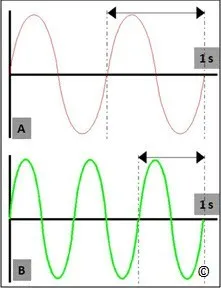
Photo: Duraisamy manivel, CC0, via Wikimedia Commons
You're listening to an ambient track. Nothing dramatic is happening — maybe some soft pads, a little reverb tail dissolving into nothing. But something feels off. Not bad off. Just... charged. Like the room shifted two degrees and nobody told you.
That's not your imagination. There's a decent chance you just got hit by a ghost frequency.
Producers — particularly in the experimental, horror ambient, and avant-garde electronic spaces — are increasingly working with tones that hover right at the outer limit of human hearing. We're talking 16kHz and above, pushing toward the 20kHz ceiling that most adults can't consciously register anymore. These aren't accidents. They're weapons, deployed with real intention, and the sonic philosophy behind them is as interesting as the sounds themselves.
What Even Is a Ghost Frequency?
Human hearing is generally described as covering 20Hz to 20,000Hz, but that range is more of a polite fiction than a hard wall. By the time most people hit their late twenties, the high end starts rolling off fast. What you can hear and what your body can respond to are two very different conversations.
Researchers have been poking at this for decades. There's a concept sometimes called the "infrasound effect" at the low end — frequencies below 20Hz that allegedly trigger anxiety, dread, and a creeping sense of presence without any audible source. The infamous 18.98Hz resonance that some researchers linked to eyeball vibration and visual disturbances became something of an urban legend in the early 2000s. Whether that specific number holds up to scrutiny or not, the broader idea stuck: sound you can't hear can still mess with you.
At the high end, the physics get stranger. Ultrasonic and near-ultrasonic tones interact with the air, with surfaces, with other frequencies in ways that generate audible byproducts — sum and difference tones, intermodulation artifacts, subtle harmonic ghosts that show up well within the hearing range even when the source frequency doesn't. Producers are leaning into exactly this phenomenon.
The Layering Game
So what does this actually look like in a session? Ask around in production forums and Discord servers and you'll find a growing number of beatmakers and sound designers who treat near-ultrasonic content as a kind of invisible seasoning.
The approach varies. Some producers run a sine wave or a narrow-band noise burst at 17kHz or 18kHz underneath a pad layer — not loud enough to be heard on most playback systems, but present enough to create what they describe as a "pressure" in the mix. Others use it more aggressively, pushing high-frequency content that technically clips or distorts when it hits consumer earbuds, generating a faint crackling harmonic that rides under the main material like a splinter.
Horror soundtrack composers have been doing variations of this for years. The low-budget film world figured out early that certain frequency combinations — particularly when they push against the limits of a speaker's physical range — create listener discomfort that audiences often attribute to the visuals rather than the sound. You think the scene is scary. It's partly the frequency content doing that to your nervous system.
Ambient producers are now bringing that technique into music that has nothing to do with horror at all. The result is a sub-genre of listening experience that feels emotionally loaded in ways that are hard to articulate. Tracks that feel bigger than they look on a waveform.
TikTok's Frequency Obsession
Here's where it gets genuinely weird in a 2024 kind of way: TikTok has become a testing ground for exactly this stuff.
Creators in the sound healing, ASMR, and experimental audio spaces have been posting videos built around tones described as "frequencies you can almost hear" — and the engagement on these things is unhinged. Comments fill up with people describing physical sensations, unease, nostalgia, even mild euphoria. Some of it is surely placebo. People expect to feel something when a video tells them they're listening to a 19kHz tone, so they feel something.
But not all of it is suggestion. The intermodulation effects are real. The way near-ultrasonic content interacts with phone speakers — which are already tiny, already distorting, already generating harmonic artifacts — creates genuinely unpredictable sonic results. A 17kHz tone through a cracked iPhone speaker becomes something else entirely. TikTok's audio compression pipeline adds another layer of transformation on top of that. By the time a ghost frequency reaches someone's ears through the app, it's passed through three or four stages of processing that no producer fully controls.
Some creators are treating that pipeline as part of the instrument.
The Japanese Psychoacoustic Connection
It's worth noting that serious academic interest in high-frequency audio content has deep roots in Japanese research. In the late 1990s and early 2000s, neuroscientist Tsutomu Oohashi published studies on what he called the "hypersonic effect" — the idea that ultrasonic components in natural recordings, even when inaudible in isolation, enhanced the subjective experience of music and triggered measurable changes in brain activity when present in a full audio signal.
The research was controversial. Some studies replicated aspects of it; others didn't. But the concept lodged itself firmly in audiophile culture, particularly in Japan, where it became part of the argument for high-resolution audio formats. If frequencies above 20kHz matter — even if you can't hear them — then lossy compression that strips those frequencies is doing something real to your experience of music.
Experimental producers in the US have been absorbing this idea, filtered through the lens of noise music, glitch aesthetics, and the general obsession with what happens when sound gets pushed past its designed limits. The result is less about audiophile purity and more about controlled chaos — using the physics of near-inaudible frequency content to generate emotional textures that wouldn't exist otherwise.
Broken Speakers as Frequency Labs
There's a beautiful irony in all of this. The producers most interested in ghost frequencies are often working on the cheapest gear, monitoring on blown-out laptop speakers or dollar-store earbuds. Not because they can't afford better, but because they want to hear what their near-ultrasonic content does when it hits hardware that can't handle it cleanly.
A pristine studio monitor reproduces 18kHz exactly. A busted Bluetooth speaker tries to reproduce 18kHz and generates three other frequencies in the process. That's not a bug — that's the whole point.
The scream you can't quite hear is loudest when the speaker is already dying. And somewhere in that broken signal, there's a feeling that no clean frequency can touch.