Crushed to Warmth: How City Pop Producers Are Using Bitcrushing to Fake the Past
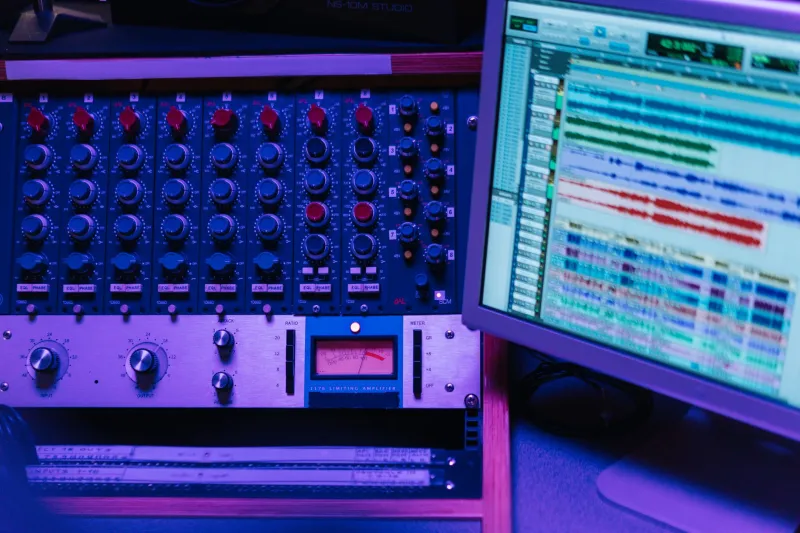
There's something almost funny about the situation. Producers are sitting in front of some of the most powerful digital audio workstations ever built — machines that can render sound at resolutions the human ear literally cannot distinguish from reality — and their first move is to make everything sound worse. Not accidentally worse. Deliberately, surgically, lovingly worse.
This is the bitcrushing paradox at the center of the current city pop revival, and it's weirder and more interesting than it looks on the surface.
What Bitcrushing Actually Does (and Why It Sounds Like That)
For the uninitiated: bitcrushing is a form of audio destruction. You take a high-resolution digital signal and you reduce its bit depth — strip it down from 24-bit or 32-bit to something like 8-bit or even lower. Do the same with sample rate, dropping from 44.1kHz down to 11kHz or 8kHz, and suddenly your pristine recording starts to develop artifacts. Quantization noise creeps in. The high end gets crunchy. Transients blur. The whole thing starts to breathe in this slightly uneven, organic way that clean digital audio almost never does.
The result, paradoxically, can feel warmer than the original.
This is the trick that a loose network of producers — many working in the US but deeply plugged into Japanese music culture through the internet — have been running for the last few years. They're using it specifically to chase the sound of 1980s Japanese city pop: artists like Tatsuro Yamashita, Mariya Takeuchi, Anri, and Miki Matsubara. Records that were themselves technically polished for their era but that have aged into this gorgeous, slightly worn quality that modern production just doesn't have.
The Warmth Was Never in the Gear
Here's the thing that took producers a while to figure out: the warmth people hear in those old city pop records isn't really about the analog equipment. It's about degradation over time. Tape formulations breaking down. Vinyl pressings developing microscopic imperfections. Playback equipment introducing its own character. The records people fell in love with on YouTube weren't the records as they were recorded — they were the records as they survived.
"I spent a long time trying to buy the right gear," says one Los Angeles-based producer who makes instrumental city pop under a Japanese alias and asked not to be named. "Vintage compressors, tape machines, the whole thing. And it still sounded clinical. Then I started just running everything through a bitcrusher at the very end of the chain, and suddenly it clicked. The imperfection was the point. You can't buy the imperfection. You have to build it."
This is the insight that separates the current wave from earlier lo-fi nostalgia. It's not about gear fetishism. It's about understanding that what people emotionally respond to in old recordings is the evidence of time — and then engineering a convincing forgery of that evidence using modern tools.
Sample Rate as Time Machine
Bitcrushing is only part of the toolkit. Sample-rate reduction is arguably the more subtle and powerful technique. Dropping a recording's sample rate changes how it handles high frequencies — the top end rolls off in a way that's different from a simple EQ cut. It's less surgical, more like putting a thin layer of gauze over the whole mix. Cymbals lose their digital sheen. Synth pads stop sounding like they were rendered yesterday and start sounding like they were dubbed off a cassette at some point in the mid-'80s.
Combine that with some gentle tape saturation, a touch of wow and flutter (pitch modulation that mimics the mechanical instability of tape transport), and you've got something that can genuinely fool people — not into thinking it's old, exactly, but into feeling the way old music makes them feel.
That emotional response is the whole game. City pop's recent explosion in the US wasn't driven by audiophiles. It was driven by YouTube algorithms and a generation of listeners who grew up in a world of perfectly produced, loudness-war-era streaming audio and found something in the imperfections of those old Japanese records that felt honest in a way modern music often doesn't.
Nostalgia as Rebellion
It's worth stepping back to appreciate how strange this is as a cultural moment. The dominant push in mainstream production for the last two decades has been toward perfection — pitch correction, beat quantization, noise reduction, limiters cranked to the ceiling. The industry spent enormous energy and money making music sound more precise, more controlled, more finished.
And now a significant chunk of the most engaged listeners on the internet are seeking out the opposite. Not just tolerating imperfection but actively craving it.
For producers working in this space, bitcrushing and sample-rate reduction aren't just aesthetic choices — they're a kind of statement. A refusal of the polished surface. A bet that the crackle and the blur and the quantization noise carry more emotional information than the clean signal underneath.
"I think people are tired of music that sounds like it was made by someone who was afraid to make a mistake," says another producer, this one based in Chicago, who releases city pop-adjacent work online. "The bitcrushing is me saying: this is allowed to be imperfect. That's not a bug. That's the whole thing."
The Authenticity Question
Not everyone is convinced. There's a reasonable argument that what these producers are making is a kind of elaborate simulation — nostalgia for an experience that most of their listeners never actually had. The original city pop audience wasn't sitting around appreciating tape degradation. They were listening to music that sounded modern and polished for its time. The warmth came later, accidentally.
Recreating that warmth on purpose, with software, is a different act. It's more like painting a reproduction of an aged painting than it is like actually making old music.
But maybe that's fine. Maybe that's even more interesting. The bitcrushing producers aren't really trying to go back — they're building a version of the past that never quite existed, tuned to resonate with people who only know that past through screens and streams. The glitch is the point. The crush is the warmth. The damage is the design.
And honestly? It sounds pretty great coming out of a pair of headphones at two in the morning when you're trying to feel something real.