Happy Accidents: The Studio Screw-Ups That Quietly Rewired Pop Music
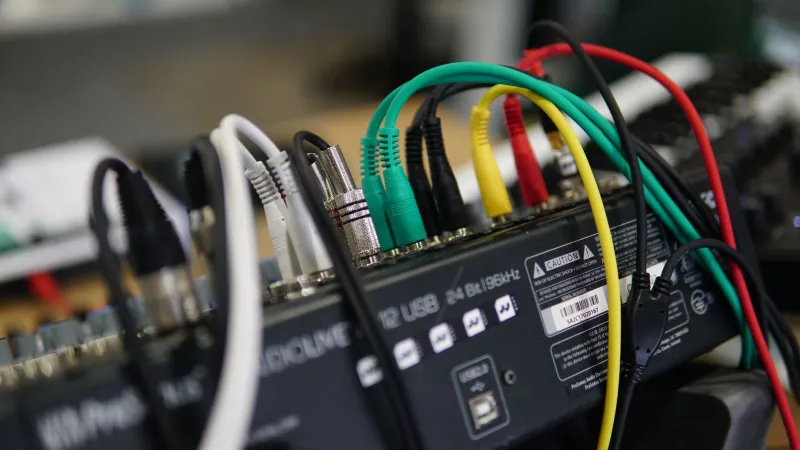
There's a certain kind of producer who keeps a running list. Not a list of plugins to buy or samples to clear — a list of accidents. The weird crackle that happened when a preamp started dying. The vocal take where the interface dropped out for half a second. The synth that started feeding back when someone kicked the power strip. These aren't mistakes to be fixed and forgotten. They're raw material.
And more and more, they're ending up on records you've definitely already heard.
The Moment the Gear Breaks Is the Moment Things Get Interesting
Here's the thing about a perfectly functioning studio: it produces perfectly functional music. Everything works the way it's supposed to, every signal path is clean, every plugin is dialed in. Which is great, technically. But technically great and genuinely interesting are two different zip codes.
When something breaks — really breaks, not metaphorically — the room changes. You're no longer executing a plan. You're reacting. And that reactive energy, that scramble to figure out what just happened and whether you can use it, tends to produce sounds that no amount of intentional design would've landed on.
Producers who've been in the game long enough will tell you the same thing: the accident is often the session. Everything before it was warmup.
A Cable, a Crackle, and a Signature Sound
Take the phenomenon of the failing DI box. Direct injection boxes are supposed to be invisible — they just move a signal from point A to point B without coloring it. When they start to go, though, they introduce this low-level grit, a kind of electrical friction that sits underneath everything like the sound of a city at 3am. Producers who've stumbled onto a dying DI mid-session describe the same experience: they try to fix it, can't, keep recording anyway, and then listen back and realize the track sounds better than anything they'd made in weeks.
The same story plays out with aging compressors that start pumping in ways they shouldn't, tape machines that introduce warble as the heads wear down, and guitar pedals whose internal components have shifted just enough to create harmonic content that wasn't in the original design. These aren't glitches in the traditional sense — they're the gear developing something like a personality.
And once a producer hears that personality on a record, they don't want to let it go. They start figuring out how to recreate it. Sometimes that means keeping the broken gear running until it finally dies. Sometimes it means modeling the failure state in software. Sometimes it means deliberately introducing the same kind of stress that caused the accident in the first place — running signals too hot, mismatching impedances, leaving cables half-plugged.
Why the Industry Keeps Rewarding This
There's a commercial logic to all of this that's easy to miss if you're only thinking about it aesthetically. Listeners are drowning in music. The sheer volume of releases on any given Friday is genuinely overwhelming, and most of it is technically competent in a way that's become almost meaningless. Clean mixes, well-arranged tracks, polished vocals — these are table stakes now, not selling points.
What cuts through is texture. Specificity. The sense that a sound came from somewhere real, even if the listener can't articulate exactly what that somewhere is. A track built around a happy accident carries that quality almost automatically, because the accident was a real event. It happened in a specific room, on a specific day, through a specific chain of gear with its own history. That's embedded in the audio whether anyone knows it consciously or not.
A&R reps and music supervisors have started talking about this in terms of "sonic fingerprint" — the idea that a production has something identifiable and unrepeatable about it. Accidents are one of the most reliable ways to generate that fingerprint, which is why producers who've built careers on controlled chaos keep getting called back.
The Intentional Accident as Practice
What's fascinating is how this has evolved into an actual methodology. It's not just "hope something breaks" — it's more deliberate than that. Producers are building workflows specifically designed to introduce controlled unpredictability. Running vintage gear at the edge of its operating range. Routing signals through unexpected combinations of hardware. Sampling and resampling through converters that aren't quite matched. Setting up situations where failure is likely and then being ready to capture whatever comes out.
This is where the Mikunigaoka Fuzz ethos really lives — that space between intention and chaos where the most interesting sounds tend to appear. Japanese noise and experimental traditions have always understood that the breakdown isn't the end of the performance, it's often the peak of it. That sensibility has seeped into how a generation of American producers think about their sessions. You don't just tolerate the accident. You invite it. You build a room where accidents are likely, and then you pay attention.
Some producers keep dedicated "junk chains" — signal paths assembled from gear that's past its prime, specifically to introduce unpredictable coloration. Others will deliberately record to a format that's slightly mismatched to their source, creating artifacts in the conversion. The goal isn't destruction. It's discovery.
What Gets Lost When Everything Is Perfect
It's worth sitting with the flip side of this for a second. There's something real that gets lost when a production is too clean, too controlled, too free of accidents. It starts to feel like a simulation of music rather than music itself. The listener can't quite put their finger on it, but something feels absent — some quality of risk, of things actually being at stake in the room.
Accidents reintroduce that quality. They're proof that something real happened. The gear didn't cooperate, the session went sideways, and instead of starting over, somebody leaned in. That decision — to lean in instead of clean up — is what separates a lot of the most interesting production work happening right now from everything else.
The chart-toppers built on broken cables and dying preamps aren't hits despite their accidents. They're hits because of them. And the producers who figured that out first are already working on the next one, probably hoping something else goes wrong.