Glitch Me Human: Why AI Music Sounds Fake Until You Break It
There's a specific kind of wrong that AI music gets. It's not bad, exactly. The chords resolve. The mix is balanced. The drums sit where drums are supposed to sit. But something in your gut tightens up about four seconds in, like you're watching a face that smiles just a half-beat too late. Technically correct. Deeply unsettling.
Producers have started calling it "the sheen" — that frictionless, slightly-too-even quality that marks algorithmically generated audio the way a watermark marks a stock photo. And the weird thing? The fix isn't better AI. The fix is deliberate damage.
The Uncanny Valley Has a Frequency
We talk a lot about the uncanny valley in robotics and CGI — that dip in comfort when something looks almost human but not quite. Turns out music has its own version, and it lives somewhere in the space between quantized perfection and the micro-chaos of a real human being playing an instrument in a room.
When a drummer hits a snare, there's drift. The stick doesn't land at exactly 120 BPM every single time. There's a millisecond of hesitation, a slightly harder hit after a fill, a ghost note that wasn't planned. When a vocalist breathes before a phrase, the breath has texture — room noise, saliva, the particular resonance of a chest cavity that ate lunch three hours ago. None of that is pretty. All of it is real.
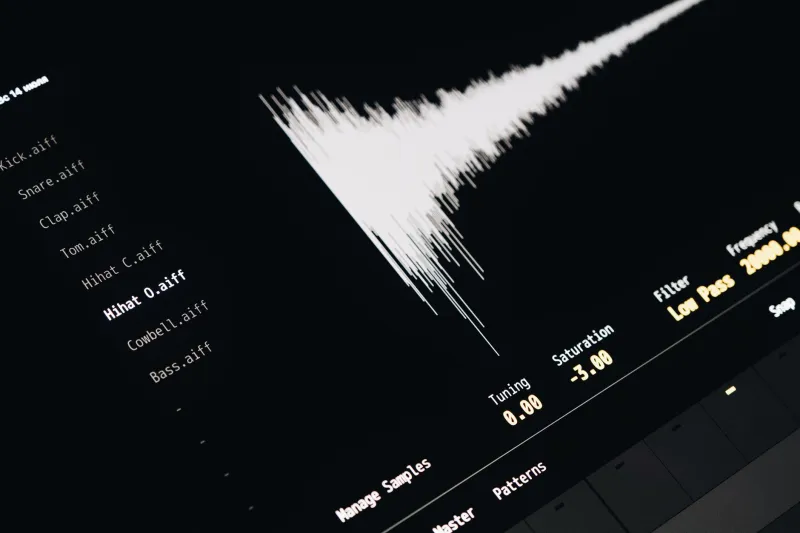
AI-generated music, even the impressive stuff coming out of tools like Suno and Udio right now, tends to iron all of that out. The timing is metronomic in a way human timing never quite is. The tonal balance is clean in a way that analog signal chains never quite allow. It sounds like music the way a mannequin looks like a person — all the proportions correct, none of the life.
The Corruption Workaround
Some producers aren't waiting for the models to improve. They're taking the AI output and running it through the kind of gear that actively degrades it.
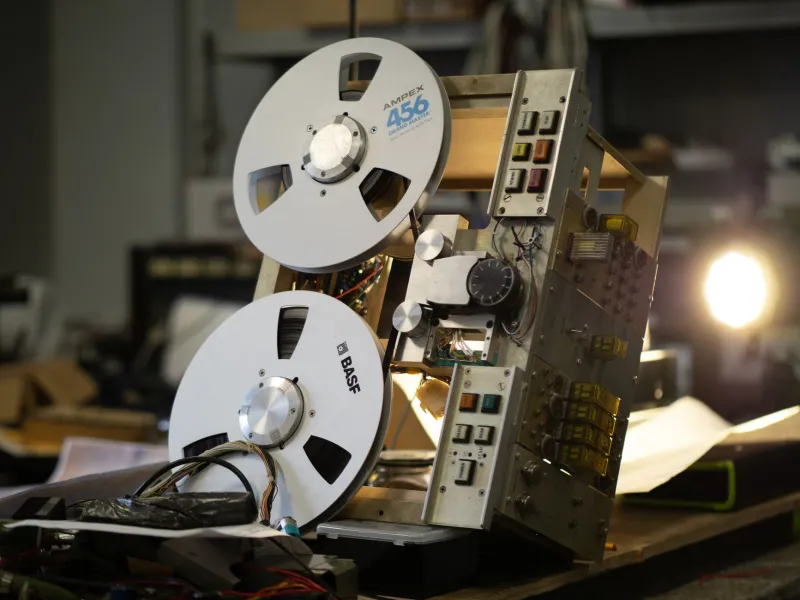
The workflow is becoming almost its own subgenre: generate a track, export the stems, then run them through a chain that might include a cassette deck, a busted preamp, some light vinyl simulation, and a subtle pitch-wobble plugin. One producer working out of a home studio in Portland described it as "giving the thing a body" — the AI writes the music, but the tape gives it a nervous system.
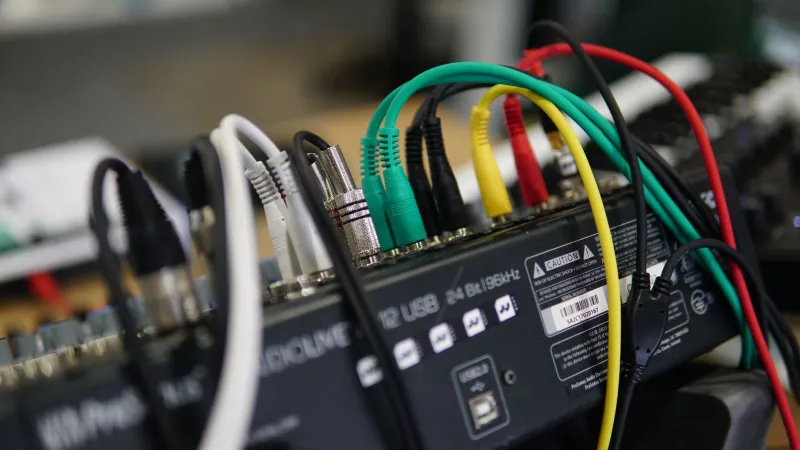
What's interesting is how targeted the damage has to be. Over-corrupt it and you get obvious lo-fi, which has its own aesthetic but doesn't solve the uncanny valley problem — it just trades one kind of artificial for another. The effective corruptions are subtle: a few milliseconds of latency variation on the drums, a slight formant drift on the vocals, a low-frequency hum that suggests a room rather than a render farm. Just enough imperfection to read as biological.
Why Imperfection Became the Proof
This is the genuinely strange place we've arrived at. For most of recorded music history, the goal was reducing noise — quieter tape, cleaner converters, tighter quantization, better pitch correction. Every generation of gear was sold on its ability to eliminate the artifacts of imperfection.
Now imperfection is the artifact we're trying to reproduce.
There's something almost philosophical about it. When everything can be generated with a text prompt, the things that can't be generated — the specific way a particular person's hands shake slightly during a high-pressure take, the acoustic character of a basement that's never been treated — become the only evidence that something real happened. Imperfection as authentication. Noise as notarization.
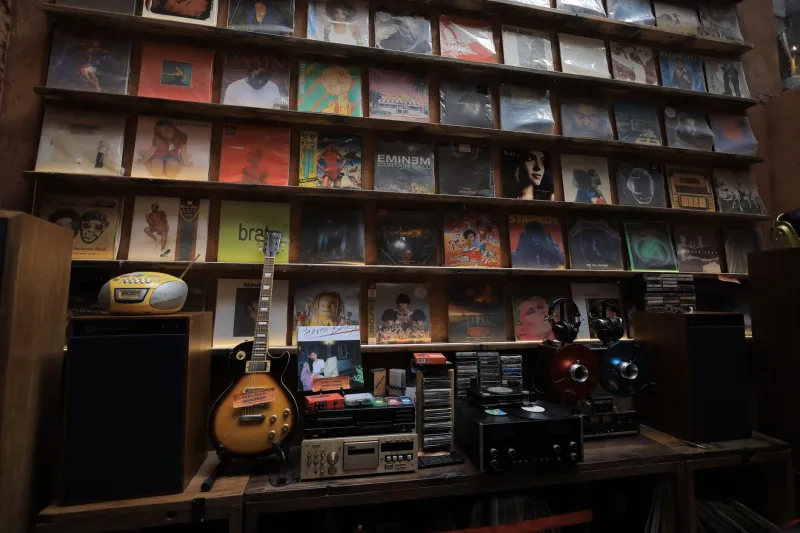
Japanese noise artists and experimental producers have been sitting with this idea for decades. The entire aesthetic lineage from onkyo to the wabi-sabi philosophy of finding beauty in impermanence maps almost directly onto what's happening now with AI music. The scratch in the lacquer isn't a flaw in the object — it's proof the object exists in time. That it was somewhere, held by someone, subject to entropy like everything else that's actually alive.
The Latency Question
One of the more technical conversations happening in production circles right now is about latency as a humanizing force. When musicians play together in a room, they're constantly micro-adjusting to each other — leaning into the beat, pulling back, responding to what just happened. That responsiveness creates tiny timing variations that our ears have learned to associate with presence.
AI-generated music has no latency in that sense. Every element is rendered simultaneously, in perfect theoretical sync. There's no call-and-response, no hesitation, no moment where the hi-hat player heard the snare and decided to push slightly.
Some producers are manually introducing this by staggering stems slightly after generation — nudging the bass a few milliseconds behind the kick, letting the vocal breathe a fraction late on certain phrases. It sounds like a small thing. The results are not small. Tracks that felt sterile start to feel inhabited.
Are We Just Fooling Ourselves?
Fair question. There's an argument that what producers are doing here is essentially a sophisticated form of self-deception — training our own ears to accept a new kind of artificial by layering it with the artifacts of an older kind of artificial. Tape hiss is also a technological artifact, after all. The warmth of vinyl is a form of distortion. We just have decades of emotional association with those particular imperfections.
Maybe the AI tracks that sound fake today will sound normal in fifteen years, once we've built up the same emotional calluses. Maybe our grandkids will find the uncanny valley completely invisible.
Or maybe not. Maybe there's something in the human perceptual system that's genuinely tuned for biological variability in a way that goes deeper than familiarity — something that will always register the difference between variation that comes from a living system and variation that's been algorithmically simulated or manually applied after the fact.
The Sound of Trying to Be Real
What strikes me most about this whole moment is what it reveals about authenticity as a concept. We've always had some version of this conversation — is studio production authentic? Is sampling authentic? Is using a drum machine authentic? Every time a new tool enters the chain, we argue about whether the music that comes out of it counts as real.
But the AI question feels different because it's not just about tools. It's about whether the signal of humanness — the mistakes, the drift, the noise — is something that can be faked, and if it can, whether it still counts as a signal.
For now, the producers adding tape hiss to their AI stems have landed on a pragmatic answer: real or not, the imperfection does something the perfection doesn't. It makes the music feel like it was somewhere. Like something happened. Like there's a body on the other side of the sound.
In a world drowning in frictionless content, that might be the only thing worth listening for.