Normalized to Death: How Spotify's Loudness Algorithm Accidentally Built a New Sound
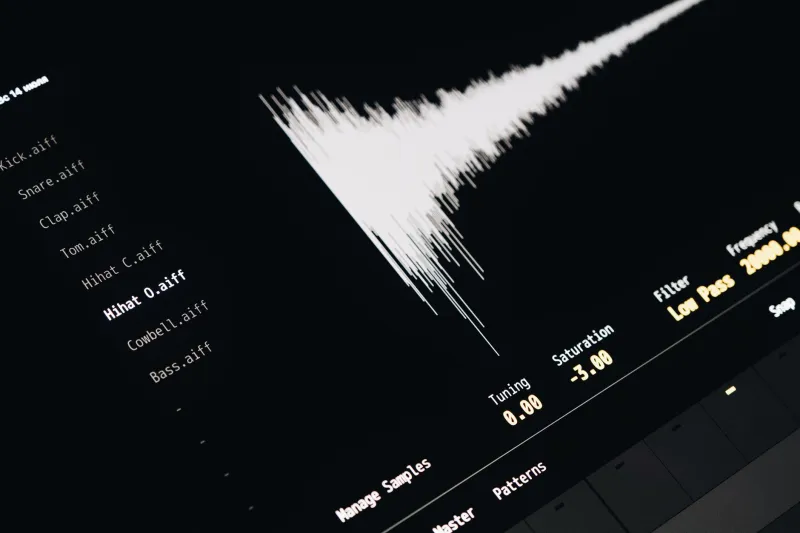
There's a quiet war happening inside every stream you play. You probably haven't noticed it. It doesn't announce itself with a drop or a hook. It happens before the song even starts — in the fraction of a second when Spotify's normalization engine decides how loud your track is allowed to be. For most producers, that's just a technical headache. For a growing pocket of underground electronic and hip-hop artists, it's the most interesting creative constraint they've ever worked inside.
Spotify normalizes all tracks to a target loudness of around -14 LUFS (Loudness Units relative to Full Scale). The idea was simple and kind of noble: nobody wants to get blasted when a new song queues up after a quiet one. So the platform just... turns everything down to match. Or up, if you mastered too quietly. Clean, democratic, invisible. Except it's not invisible at all once you start pushing the edges of it.
What Happens When the Algorithm Fights Back
Here's the thing about normalization: it doesn't just adjust volume. When a track is mastered hot — crushed into a brick of audio with heavy limiting — and then pulled down by Spotify's engine, the dynamic relationship between elements shifts in ways that can sound genuinely strange. Transients that were already smashed get pulled further into the mud. Distorted textures that were riding the ceiling suddenly sit in a completely different part of the frequency picture. Things that sounded powerful in a DAW can land on stream sounding weirdly thin, or washed out, or — and this is where it gets interesting — kind of beautifully broken.
Producers who started noticing this weren't just complaining on forums. Some of them started experimenting. What if you mastered specifically for the normalization? What if the algorithm's correction wasn't the enemy but the final plugin in your chain?
"It's like you're mixing for two listeners," says one Brooklyn-based electronic producer who asked to stay anonymous. "There's the person hearing it on a reference monitor, and then there's the version that comes out the other side of Spotify's processing. I started caring more about the second one."
Distortion as a Survival Strategy
This is where it connects to something bigger. The producers leaning into Spotify's normalization quirks aren't doing it because they're lazy or cutting corners. They're doing it because they've realized that certain types of distortion and noise survive the algorithm in ways that clean, polished audio doesn't.
Heavy saturation on a bassline, for instance, creates harmonic content that the normalization process can't fully flatten. The overtones ride above and below the loudness correction in ways that feel present and alive even after the platform has done its thing. A bitcrushed hi-hat retains its grit because the artifact frequencies are structurally baked in — they're not just volume, they're texture. You can turn texture down, but you can't remove what it's made of.
Some producers are deliberately clipping individual elements — not the master, but specific tracks within the mix — so that the distortion becomes a fixed characteristic of the sound rather than a dynamic one. When Spotify adjusts the overall level, those elements don't lose their edge. They keep it. The noise is load-bearing.
The Genre That Doesn't Have a Name Yet
What's emerging from all of this is a production aesthetic that's hard to pin down but increasingly easy to recognize. It's music that sounds slightly wrong in a specific way — not lo-fi exactly, not glitch exactly, but something that occupies the space between intentional degradation and algorithmic accident. Tracks where the mix feels like it's been processed twice, once by the producer and once by the platform, and both sets of fingerprints are visible.
You hear it in certain corners of SoundCloud and Bandcamp, in producers whose work sounds pristine on a phone speaker and genuinely alien on studio monitors. You hear it in underground rap beats where the 808 has this weird, almost corroded quality that shouldn't work but somehow sits perfectly in a streamed context. You hear it in experimental electronic tracks where the noise floor feels intentional in a way that's hard to articulate — like the room itself is part of the composition.
Nobody's called it anything yet. That's fine. Genres that get named too early tend to calcify. The interesting stuff is still moving.
The Loudness Wars, Reloaded
It's worth remembering that the loudness wars — the CD-era race to master tracks as hot as possible — produced some genuinely iconic textures before it became a punchline. Death Magnetic. The first Californication. Records that sound like they're being squeezed through a keyhole, and somehow that pressure became part of their identity. Spotify's normalization was designed to end that arms race. But it didn't end the impulse. It just redirected it.
Instead of competing to be the loudest, producers are now competing to be the most interesting after the algorithm has had its way with them. That's a genuinely different creative problem, and it's producing genuinely different solutions. The constraint isn't a ceiling anymore. It's more like a filter — one that rewards a certain kind of textural thinking and punishes the kind of polished, dynamic-range-heavy production that used to be the gold standard.
Making the Algorithm Your Co-Producer
There's something almost poetic about this, and it fits right into the broader logic of noise-as-craft that's been running through underground production for years. The idea that a technical limitation — a compression algorithm, a busted cassette deck, a Game Boy sound chip — can become generative rather than restrictive. That working inside a broken or constrained system doesn't mean settling for less. It means finding what only that system can produce.
Spotify didn't set out to create a new genre. Its engineers were solving a user experience problem. But by imposing a technical standard on every piece of audio that moves through the platform, they handed producers a shared environment to react to — and some of those producers are reacting in ways that are genuinely pushing the sound forward.
The frequency that kills your mix might be the one that defines it. That's not a bug. That's the whole point.